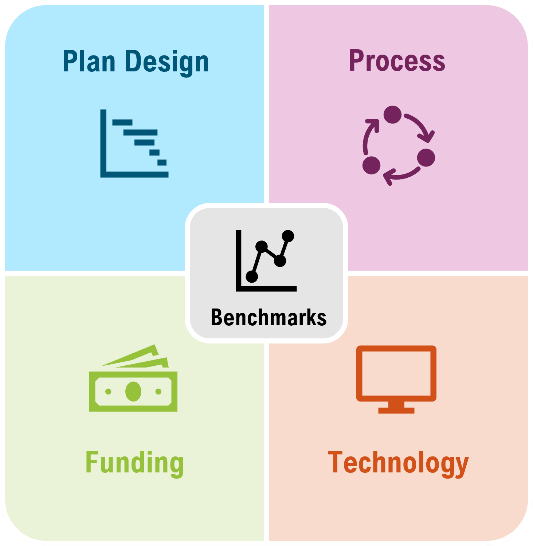

Executive Summary
In the ever-evolving landscape of employee benefits, wellness solutions have emerged as a pivotal focus point for employers with a long-term view of health and productivity. Recognizing the vital link between a healthy workforce and organizational success, employers are redefining wellness programs to meet the diverse needs of their employees.
Employee wellness programs have undergone a remarkable transformation since the start of the pandemic. Once limited to in-person fitness challenges and generic health screenings, these programs have evolved into holistic initiatives that prioritize the everyday wellbeing of employees (both inside and outside of work). Employers are now taking a proactive approach, aiming to not only prevent health issues but also enhance employee engagement, productivity, and job satisfaction. In a survey conducted by Glassdoor, 60% of job seekers reported that benefits and perks are a significant factor in considering job offers. A robust wellness program signals an employer’s commitment to employee well-being, making the company an attractive destination for skilled professionals seeking an organization that values their health and work-life balance.
What is the impact on healthcare spending?
Investing in employee wellness is no longer a discretionary choice; it’s a strategic imperative. The cost of poor employee health is significant, leading to decreased productivity, increased absenteeism, and higher healthcare expenditures. According to Harvard researchers, every dollar spent on employee wellness yields a reduction in healthcare costs of $3.27 and a decrease of $2.73 in costs related to absenteeism1. A similar ROI study conducted by the International Foundation of Employee Benefit Plans determined that employers save between $1 and $3 on healthcare costs for every dollar spent on wellness initiatives.
These cost savings are from both direct and indirect triggers, and it’s important to also include more qualitative factors like retention and productivity when you look at the cost/reward analysis.
Point Solutions Overview
Employee wellness is an important yet broad and nuanced space. Over the last decade, we have seen a significant increase in point solutions dedicated to well-being outcomes, some of which include:
- Fitness Coaching, Apps and Trackers: Applications designed to support the physical health of employees.
- Wearable devices connected to apps that track steps, calories burned, and other indicators have grown in popularity.Team Challenges via apps, such as walking/biking challenges, are great tools to encourage healthy habits amongst dispersed workforces. Incentives can be used to boost participation.
- Digital fitness classes provide a library of specialized activities and workouts individuals can take advantage of to meet health goals.
- Nutrition/Weight Loss tools: Platforms that promote healthy eating and physical wellbeing practices.
- Dietary apps can provide an array of healthy recipes and record eating/snacking habits.
- Weight management platforms offer a range of tools including nutrition plans, weight trackers and virtual support.
- Personalized Apps: Tailored resources that provide personalized goal tracking, and virtual coaching.
- Smoking cessation tools and programs can help people track, reduce, and quit tobacco/nicotine consumption.
- Alcohol misuse programs allow individuals to access workshops, webinars, and other tools to reduce drinking.
- Mental Health Support Platforms: Offerings that focus on stress reduction, mindfulness, meditation, and access to mental health care.
- Sleep/meditation apps are being used to lessen stress, reduce anxiety and drive productivity.
- Digital therapy platforms are great for reaching out-of-state and international workers.
- Financial Wellness: Programs that provide tools for managing financial stress, planning for retirement, and addressing debt.
What should I do as an employer interested in wellness point solutions?
For committed employers, point solutions should be just one component of an overarching wellbeing strategy that takes into account the following:
- Assessing Current Health Trends: Analyze health data to identify prevalent health issues and trends within the employee population.
- Designing Tailored Solutions: Use this data to inform decisions around point solutions. It is rare the overcommitting to point solutions will produce the desired results; we recommend a more pointed approach. Craft an approach that addresses specific needs, encompassing physical, mental, and emotional well-being.
- Benchmarking and Surveys: Compare your offerings to industry standards and continually assess its effectiveness through employee feedback and measurable outcomes.
- Incorporating Cutting-Edge Technology: This is where point solutions come in; leverage technology and tools to provide engaging and accessible wellness resources, from wearable devices to wellness apps.
- Promote Inclusivity: Ensure that wellness solutions cater to a diverse workforce, taking into account geographic, cultural, and accessibility considerations.
The journey towards a healthier and more productive workforce begins with employers’ commitment to holistic wellness solutions. As employee needs evolve, so too must wellness programs. By embracing innovative models, tailoring benefits to specific needs, and fostering a culture of well-being, employers can embark on a transformative journey that not only enriches the lives of their employees but also contributes to the overall success of the organization. Wellness point solutions, if tackled thoughtfully, can be a tool in your toolbox to arrive at a healthier, happier, and more vibrant workforce.
1 https://www.bravowell.com/resources/do-wellness-programs-save-companies-money
Demand for new weight loss medications continues to rise and employers remain concerned about budget impacts if they decide to offer these costly medications as part of their benefit package. These medications, known as GLP-1 agonists have skyrocketed in popularity and are thought to be “miracle drugs” by many. The reality is that weight loss requires a multi-modal approach and not all people who use them will achieve significant weight loss. Studies have shown that once discontinued, patients gain an average two-thirds of the weight back1. The reality is there is no miracle cure, but these medications have helped to destigmatize obesity and make clear the benefits of taking a multi-faceted approach to sustain weight loss.
Employer Case Study
As is the case with many organizations, weight loss drug strategy was recently of particular interest to one of our clients, edHEALTH. The client was interested in the positive impacts yielded but was daunted by the complex dynamic of long-term cost versus benefit.
Spring assisted edHEALTH in assessing a best practice avenue for weight loss drugs, keeping in mind that spending on obesity-related conditions result in approximately a 12% increase in total healthcare costs2. Wegovy (semaglutide) has an average price of approximately $1,349 a month, or more than $15,000 annually. That is more than double what the Institute for Clinical and Economic Review (ICER)3, a private entity that provides an independent source of evidence review and creates cost-analysis reports, recommends, instead stating that Wegovy should be priced somewhere around $7,500–$9,800 per year to fall into the cost-effective threshold.
We worked with edHEALTH and its PBM partners to fully understand their weight loss medication utilization management and monitoring parameters. As a member consortium, edHEALTH is committed to providing their member institutions with the information needed to assist them in determining the best cost-management strategies. Therefore, a key part of our evaluation was to prioritize the education of staff and faculty on the protocols and side effects of these medications to potentially narrow the interest to those highly motivated groups. There is no one size fits all solution, but there are specific points of consideration and educational resources that can help organizations of any kind address this topic with stakeholders.
Additional recommendations included:
- Ensuring plan participants understand that treatment should extend beyond the medication
- A comprehensive approach is critical and ideally includes behavior-management coaching, nutrition support, an exercise plan, and accountability check-ins.
- Non-medication initiatives might include fitness reimbursements, nutrition programs like WW (formerly Weight Watchers), and/or employee walking challenges. Incentives should be woven into these programs.
- Reauthorization requirements with the PBM should be in place (approximately every 6 months) to confirm patients are receiving the expected positive response to therapy related to goals.
For example, edHEALTH hosts an annual walking challenge between member schools, with prizes and check-ins along the way. The healthy competition creates a simple yet effective way to get employees moving more than they might otherwise, and a tactic like this pairs nicely with an overarching weight loss strategy.
Considerations for Employers
Ultimately the choice to cover these medications is an organizational decision, but it’s critical to have all the information necessary to make this decision, starting with a robust view of your population demographics. With high rates of obesity for most health plan sponsors, a prudent and thoughtful approach to expanding weight-loss coverage will be required. Attempts like this to tackle the obesity epidemic could produce long-term savings with lower overall healthcare costs, prevention of progression of existing diseases, and most importantly a better quality of life and employee experience.
No matter your decision on offerings, the more you can offer through communications and education will help your plan participants make informed decisions and understand their role in achieving and keeping weight off. To realize tangible results, all parties must be committed.
Our clinical pharmacist and benefits consulting team is here to help you assess weight loss as a component of your benefits strategy, including not only weight loss drugs but also wellbeing initiatives and data analytics for monitoring success. Get in touch for assistance in navigating this nuanced and rapidly evolving area.
1 https://www.nbcnews.com/health/health-news/happens-stop-taking-wegovy-ozempic-many-people-regain-weight-rcna66282
2 https://www.hsph.harvard.edu/obesity-prevention-source/obesity-consequences/economic/
3 https://icer.org/news-insights/press-releases/icer-publishes-evidence-report-on-treatments-for-obesity-management/
Introduction
With employers being challenged with attraction and retention, employee benefits and perks take center stage. Many organizations are aware of the importance of benchmarking when it comes to the competitiveness and performance of an employee benefits program, but are unsure about how to get started or what programs to compare.
Benchmarking can be conducted across a range of offerings, but recently time off programs have been a significant area of interest for employees and employers, especially around parental and family leave. If your organization is considering changes to your program – or just looking to verify your time off programs remain competitive – benchmarking is critical.
Getting Started
No matter which benefit you want to benchmark, including time off programs, it’s important to set the stage before the number crunching phase. Start with:
- Confirm benchmarking objectives: be sure to establish what you want to accomplish and why. Think about what problem you are trying to solve, or question you are trying to answer. What specific outcomes can be associated with the metrics you are trying to highlight? You might want your benchmarking to inform how your program is performing so you can make the case for additional resources, or how your program is structured, so you can explain how it could be more competitive for attraction and retention.
- Determine how you will gather data: the more focused you can be in your efforts, the more expediently you can get to the results. This starts with deciding which programs you are going to benchmark and metrics you are going to compare. You will also want to confirm whether you are interested in:
- Internal benchmarking, where the comparison is made against your own data over time
- External benchmarking, where metrics or practices of your company are compared to one or many other companies
- Both internal and external benchmarking
External benchmarking is perhaps the more talked about path, but both can provide real value and insights based on what you are trying to achieve.
Digging In
When it comes to paid time off, policies worth evaluating might include:
- Vacation/Paid Time Off (PTO) or Flexible Time Off
- Sick Leave as a standalone offering vs. included in PTO
- Other types of leave, such as:
- Personal Leave
- Bereavement Leave
- Mental Health Days
- Volunteer Days
- Sabbatical
- Military Leave
- Parental Leave (birthing and bonding)
- Family Care Leave
When conducting external benchmarking to compare your leave benefits with those of other companies, you might be interested in analyzing the following categories:
- Accrual vs. front loading
- Duration by leave type
- Eligibility by leave type
- Percentage of pay by leave type
- Contribution methodology (e.g., perhaps you have employees in states with Paid Family and Medical Leave (PFML) laws)
- Equity across workforce demographics, for example:
- Leave tracking systems
- Variations based on employee status, tenure, and employee type or classification
It may also make sense to filter your evaluation by parameters like company size, location, industry, etc., so that you have as clean of a comparison as possible.
On internal benchmarks, it’s important to understand what’s actually happening in your population. Utilization data may be your best source of “benchmarking” related to time off programs. Work to understand when employees are using time, establishing patterns of behavior among different employee classes. Use this data to defend maintaining the status quo or making changes.
There are many ways in which you can slice and dice benchmarking data related to time off programs, and you don’t have to do it all. Always go back to your established goals and then work backward to identify which data sets will inform those objectives.
Industry Standards
We are constantly fielding questions around the competitiveness of leave offerings, particularly related to parental leave and PTO/vacation days. Data in this area is varied, but below are some statistics that can give you a gauge of norms.
- 82% of companies offer vacation or PTO1
- 11% of companies offer unlimited PTO (more common for large employers and those in the Information Management/IT sector)1
- Large employers (1,000+) tend to offer more time off compared to smaller companies1
- 51% of employers offer paid parental leave2
- 46.5% of employers offer paid family care leave2
- 40% of employers offer mental health days2
- 92% of employers offer sick leave2
- 66% of employers offer “other leaves of absence” like personal, bereavement, jury duty, and/or military leave2
Number of Time Off Days Given Based on Years of Service1
| New Hire | 1-5 Years of Services | 6-9 Years of Services | 10+ Years of Services | |
| PTO Bank | 0-10 days | 11-15 days | 11-20 days | 20+ days |
| Sick | 1-5 days | 1-5 days | 1-5 days | 1-5 days |
| Vacation | 0-10 days | 6-10 days | 11-15 days | 16-20 days |
| Personal | 0-5 days | 1-5 days | 1-5 days | 1-5 days |
Get in Touch
If you’re interested in benchmarking your benefits programs such as leave offerings, or are wondering how your programs stack up, Spring’s subject matter experts would love to hear from you.
1 Alera Group Healthcare & Employee Benefits Benchmarking Survey, 2022
2 Spring Consulting Group’s 2022 Integrated Employer Survey
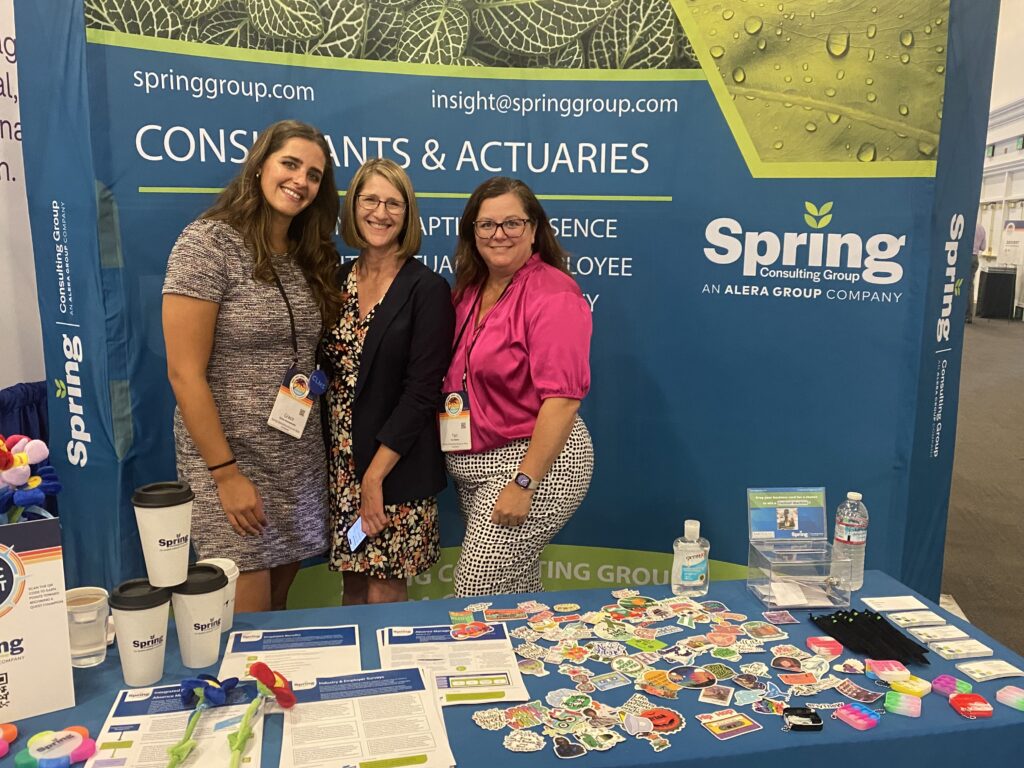
As a mark to the end of summer, The Disability Management Employer Coalition (DMEC) hosted their Annual Conference in the beautiful (and beachy) San Diego! The conference is in a different city every year, and it was refreshing being by the water this time. DMEC is one of the leading organizations in the absence and paid leave landscape; their conference brings together stakeholders from all across the industry to connect and discuss trends and best practices.
Here are some buzzworthy topics I wanted to share from the conference:
1) Mental Health Support
Although the demand for employer support for mental health and wellbeing services may not be as high as it was during the COVID-19 pandemic, it remained a hot button topic at this year’s conference. As mental health support solidifies its place in the benefits industry, employers are looking at innovative ways to stand out and cut costs. Some related presentations I found insightful include:
-The very first session of the conference, “A Mental Health Culture Shift: Addressing It from the Top Down,” brought together representatives from multiple health systems to discuss the importance of developing mental health resources that work for employees of all levels.
– In the presentation, “The Echo Pandemic: Mental Health, Lost Time, and Benefits Spend,” the speaker reviewed the ROI impact of preventative wellbeing solutions on benefits spend and workplace culture.
– In a one-of-a-kind presentation, a licensed psychologist reviewed “Regulated Psychedelics for Mental Health & What You Need to Know.” As psychedelic therapies are expected to be approved in 2023-2024 for PTSD treatment, this session reviewed how this will impact employers and their mental health offerings.
2) Compliance Strategies
It seems like at every conference and event I attend, compliance is top of mind for employers across the nation. With shifting national, state, and local regulations, it can be difficult to stay compliant while satisfying a dispersed workforce. Here are some noteworthy sessions related to compliance:
– During my final session I was joined by industry experts to discuss “New Models for PFML: Education and Action.” We broke down various state programs, private versus state plans and considerations for PFML insurance policies under voluntary programs.
– Two compliance managers reviewed important cases when the DOL and EEOC disagreed with court decisions and how it eventually played out in their presentation, “Flip or Flop: When the Courts (and Regulations!) Disagree.”
– As mandatory paid sick and safe time (PSST) regulations continue to shift, presenters in the session “Time for a PTO Overhaul! Why the Legal Landscape Compels Us to Consider a Multi-bank Paid Time Off Structure,” discussed how to stay compliant while maintaining a single-bucket PTO approach.
3) Returning to the Office/WFH Approaches
As the worst of the pandemic echoes behind us, many employers are trying to revert to tradition and get people back in the office (or find some middle ground). Decisions made regarding this dynamic will lay the foundation for employee culture and how employers approach leave management. Below are some relevant presentations I wanted to highlight:
– Experts discussed “Transitional Return-to-Work Programs that Last,” this included the cost benefits of these programs and tactics to educate and motivate front-line managers.
– A representative from Headversity, provided tips and resources to help empower future generations of women leaders. This included addressing accommodations that support the work-life balance of female employees.
4) Leveraging Tech
Tech in the absence and disability space continues to evolve with the introduction of new innovations and tools that can help create efficiencies and drive best practices. Even building on existing tools and systems can help us better understand current patterns and trends. Here are some presentations I found most insightful:
– In an interactive session with DMEC’s CEO, Terri Rhodes, Spring’s Jackie Myers and me, the attendees engaged in DMEC Benchmarking Jeopardy, which spotlighted DMEC’s new benchmarking platform that Spring helped build, which will give users an easy and user-friendly way to compare and contrast absence management policies and procedures.
– My colleague Marcy Updike and I reviewed survey data that analyzed the monetary value of flexible time off programs and their potential impact on recruiting and retention during our session, “The Value of Workforce Flexibility: Impact & Tradeoffs.
– Representatives from three different absence software companies discussed “Key Considerations for Selecting & Implementing Software as a Solution.” They reviewed employee considerations for implementing absence software and tips for managing day-to-day operations.

As a regular attendee and partner of DMEC, I have to say this may have been my favorite destination to date! As we approach the end of summer, it was great enjoying a few days of sunny weather. Throughout the busy few days, the Spring team and I had a great time reconnecting with industry leaders and deepening our knowledge of innovations in the leave management space. We are excited to see what next year’s conference has in store for us!
As pharmacy and prescription drugs continue to drive healthcare costs for employers. Many are reevaluating their Pharmacy Benefit Manager (PBM) arrangement to ensure transparency, strategic alignment, and fair pricing. Click here to access our Q&A and generate your PBM Report Card.
It has been 30 years since the Family and Medical Leave Act (FMLA) was passed at the federal level under former President Bill Clinton. FMLA grants eligible employees with unpaid, job-protected leave for qualifying family and medical reasons with continued employer-sponsored group health insurance coverage, if applicable. Since then, some adjustments to FMLA have been made, such as the inclusion of workers with a family member in the military and those in a legal, same-sex marriage. However, the evolution has been slow and limited; many believed or at least hoped that over time FMLA would evolve into a paid leave model, but over the last three decades, it is states that have taken initiative in establishing PFML programs for their workers.
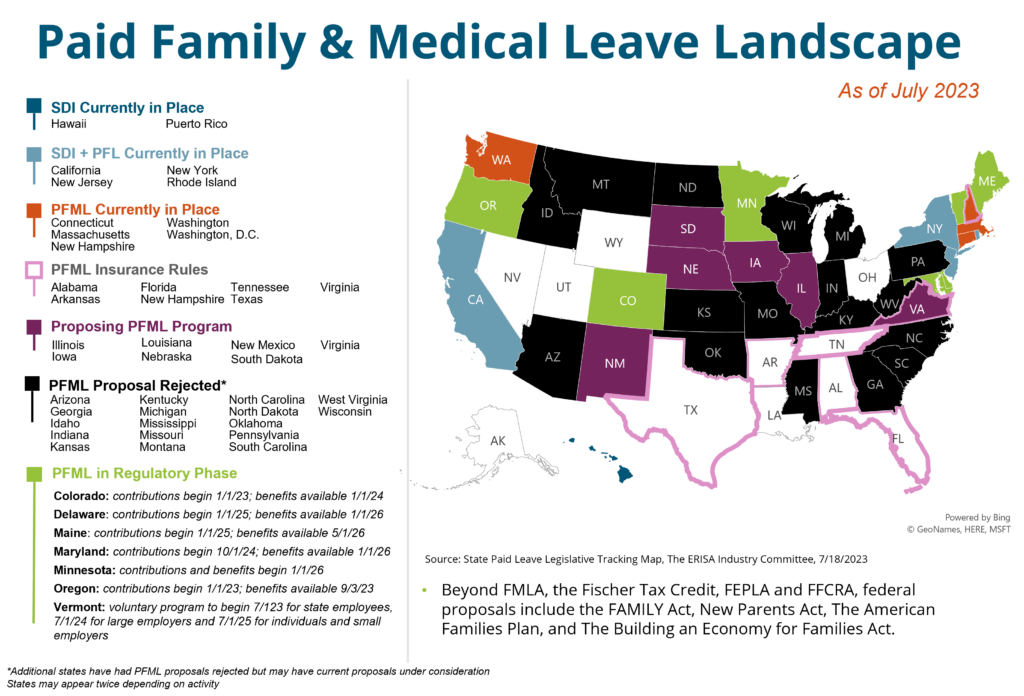
Starting with California in 2004, 11 states and Washington, D.C. now have some type of established PFML program, with several other states including Maryland, Colorado, and, most recently, Minnesota, in the regulatory phase where a law has passed but benefits are not yet available. Plans vary by percentage of wage replacement, maximum weekly benefits, the contribution split between employer and employee, benefit duration, and other factors. The newest trend in PFML law, however, relates to PFML as an insured product.
PFML Insurance Rules
Recently, states including Virginia, Tennessee, Florida, and Alabama have passed legislation related to a voluntary PFML insurance product, as opposed to the more traditional, mandatory PFML programs that we had been seeing in previous years. With this new model, state laws create a new line of family leave insurance that may be written as an amendment or rider to a group disability income insurance policy, or as a separate group insurance policy purchased by an employer.1 Employers may offer the product for their employees without obligation to do so, in a setup similar to other voluntary benefits like short-term disability or vision insurance. In this way, it is purchased through an employer but at the individual’s expense and discretion and a third party insurance carrier is used to carry out the program.
As an example, under the Tennessee Paid Family Leave Insurance Act, a new line of insurance called paid family leave (PFL) insurance has been established. It can be offered as a rider or included in a policy for short-term disability, life insurance, or as a standalone PFL policy. Qualifying reasons for a leave of absence include the birth or adoption of a child, placement of a child for foster care, care for a family member with a serious health condition, and reasons related to a family member’s active military duty. The insurance is purchased through an employer arrangement, but unlike the voluntary program launched this year in New Hampshire, there are no tax incentives for employers who offer the PFL product.
Preliminary Results
PFML as an insurance product is a new concept that we expect to evolve over time.
Take-up by employers will likely vary on their size, culture, geographic spread, and most importantly their current benefit offerings. Some employers may appreciate the model law as a guide to providing a new benefit for employees, or a competitive benefit to what is offered in other states so that equity could be achieved across locations. Others could feel it is too costly for them to offer, or they may already have equivalent benefits in place. Whatever the case, employees are becoming increasingly aware of these laws, and employers need to be ready to explain why they are or are not supporting them.
At the state level, it may be an intermediary step to the establishment of a mandatory PFML program, or it may be a way of offering some benefit without the budgetary and resource constraints required to build out a more traditional plan.
This new wave of PFML laws is just getting started, however, and our team will be closely monitoring utilization and legislative developments. In the meantime, check out our absence management services here or get in touch with our team if you have questions about the direction of PFML.
1 (2023). Absence Advisory June 2023. Aflac
Current State
Costs, risk, regulations, and complexity have all contributed to a decrease in these employer-sponsored retiree benefits over the last few decades. When we combine today’s rising healthcare and benefits costs, economic instability, and an aging population, the result is a quandary for employers with retiree liabilities.
Organizations are looking for solutions to lessen and manage these liabilities. A 2022 MetLife study found that 85% of plan sponsors say their company’s post-retirement benefits received significant attention in 2022 from their corporate management because of the financial effects that their volatility and related risks place on their corporate balance sheet and income statement. In fact, the same study estimates that pension risk transfers represented between $50 and $52 billion in 2022. The study surveyed plan sponsors with one or more post-retirement medical and/or post-retirement life insurance plans for current or former employees. 78% of the survey’s plan sponsor respondents work for companies with $100 million or more in retiree medical and/or retiree life insurance plan obligations, putting serious strain on fiscal matters and causing a shift in priorities.
Solutions Available
Insurance companies like taking on pension risk for retirees, because payment amounts are known, as is the form of payment. In addition, the risk is somewhat short-term, related mostly to mortality. Accordingly, insurance companies quote on retiree liabilities with competitive prices, and several plan sponsors have settled some or all of their retiree liability.
Contrast this with terminated vested participants, who may have several decades until retirement. In this case, the benefit amount is dependent on several factors like age at retirement and form of payment elected. There is also substantial investment risk for plan sponsors. While these uncertainties are commonplace in pension plans, insurers build in substantial margin to compensate them for taking on these risks. This can be especially problematic for plan sponsors who have already settled much of their retiree liability, leaving only the less attractive liability to insurers on the books.
U.S. GAAP sets out stringent employer requirements when it comes to accounting for the accrual of estimated total retiree medical and other benefits; however, it does not force employers to fund these obligations. Employers are merely required to recognize them. Recognition nonetheless creates a liability without an offsetting asset.
The good news is that innovative funding mechanisms are available to assist with plan termination. One example is the SECURE Act 2.0, signed into law on December 29, 2022, which paves the way for overfunded pension plans – now defined as those that are at least 110% funded – to transfer up to 1.75% of plan assets to a program used to pay for retiree health and retiree life insurance benefits through 2032. Derisking and buy-out solutions continue to be prevalent as well, although they often come with a substantial margin for insurers. A retiree medical buyout leverages a customized group annuity issued by a highly rated insurance company to transfer the retiree benefit obligation from the corporate sponsor to the insurer. MetLife reports that 84% of surveyed planed sponsors are considering such a buyout for their retiree life insurance liabilities.
More and more plan sponsors are transferring or allocating excess pension assets from overfunded defined benefit pension plans to fund other retiree benefit obligations, such as retiree medical and life insurance. According to MetLife’s 2023 Post Retirement Benefits Poll report, 55% of plan sponsors surveyed have already transferred assets in this way.
Another tactic gaining traction as a viable funding solution for retiree benefits is captive insurance. Companies can rely on IRS Revenue Ruling 2014-15 to set up a captive that exclusively writes noncancellable accident and health insurance to cover retiree health benefits. With the coverage being life insurance, the captive’s reserves will receive life insurance tax treatment which thus allows the reserves to grow tax free. More importantly, the company is able to fund the retiree health benefits in a new captive without DOL approval since they do not fall under ERISA. This is the type of status-quo-challenging strategy that may prove critical for organizations grappling with defined benefit plan promises, given today’s difficult market conditions.
Case Study: Utilizing a Captive Insurance Arrangement to Manage Defined Benefit Pension Risk
Spring has worked closely with the pension risk transfer groups at insurance companies, who consistently price liabilities for settlement at 20% or higher than the US GAAP liability that plan sponsors recognize on their books for vested terminated participants. This is significantly higher than retirees, who can sometimes be priced at or even below the US GAAP liability.
Spring has developed solutions for clients to settle plan liabilities at very close to what plan sponsors currently recognize. This is a substantial savings to plan sponsors, and it allows the plan to be terminated sooner. Below we are bringing some of these concepts to life with a case study.
The Challenge:
A plan sponsor with a billion-dollar pension plan wanted to review risk management options for their plan, including how best to manage a large bulk annuity transaction. The organization had previously completed smaller transactions, including retiree annuity buy-outs as well as vested term lump sums. They were now looking to complete a much larger annuity transaction, but they wanted to better understand the full spectrum of options. A traditional annuity transaction would have been quite expensive given the conservative nature of how commercial carriers price deferred liabilities. While many factors impact the price of a transaction, the low interest rate environment, mortality risk charge, as well as conservative long-term investment options all contributed to a much higher transaction cost under a standard plan termination than the sponsor felt was reasonable.
The Process
Spring assessed various risk management options for the organization to consider, including an additional vested term lump sum window with a robust communication program to increase the take rate as well as a much larger bulk annuity transaction for the entire plan. The organization was interested in exploring an additional lump sum window, but first wanted to focus on how best to move forward with a cost-effective bulk annuity transaction. Rather than exploring these options with their plan actuary, the plan sponsor was also looking to work with an organization that could provide for a more objective and independent analysis without any conflicts of interest.
We reviewed options for a possible bulk annuity transaction with the organization which included both buy-in and buy-out strategies. We recommended exploring the use of a captive to improve the overall cost and participant security of the bulk annuity transaction. Using a captive can substantially lower the cost of the overall transaction, particularly for plans looking to transfer obligations for more than existing retirees only. A captive provided several benefits including:
- Lower cost of overall transaction
- Increased operating income
- Control over assets
- Risk diversification in the captive
- Improved participant security
The Results
This strategy yielded the following positive impacts:
- Over a 10% reduction in the one-time premium outlay for the transaction
- Participant security is enhanced because the captive provide an additional commitment to pay the benefits in addition to the fronting carrier.
Conclusion
Innovative tactics are available for organizations facing financial stress related to defined benefit plan liabilities, combined with the volatile market circumstances we’re seeing today. If your organization has pension plan liabilities and is looking for a strategy to mitigate this burden, you may want to evaluate the different options available to ultimately help you realize savings and enhance your risk management strength.
A summary of our webinar with the Northeast HR Association (NEHRA)
When it comes to health and productivity programs, the past several years have been a time for Benefits and HR professionals to test out a range of initiatives in response to pandemic and post-pandemic challenges, priorities, and employee expectations. Now, however, the market is in a different place and it is time to assess the impact of recent program offerings; does the reward outweigh the risk?
The Big Picture
Today’s economy is creating urgency around making sure benefits programs are properly managed. High inflation rates touch everything; the impact doesn’t stop at the grocery store or the gas pump, it extends to already high healthcare costs. In addition to the economic reality, we have seen an increase in healthcare utilization coming from new treatments and technologies available, further increasing costs. Relatively low unemployment may have shifted attraction and retention goals for some organizations, but a rise in layoffs is having tangible effects on the labor market at large which trickles down to employer strategies. It’s not just employers facing challenges, though, as healthcare services have become unaffordable for many and consumers/employees are also feeling the cost burden.
As a starting point, take a look at your data to answer questions like:
- What does your population look like in terms of demographics and health trends?
- What are your employees selecting for benefits?
- What is driving your costs?
- How might you segment your population?
- Are you accounting for future population shifts and resulting needs (e.g., company growth)?
You should then be able to assess whether or not your benefits align with your population as well as your corporate objectives. When determining true return on investment (ROI), it’s important to consider both human and financial perspectives.
Now that we have established a bird’s eye view of the risk versus reward equation, let’s drill down into key plan components that factor in.
1. Risk Management
There are a range of risks to consider within your benefits strategy. There is the risk of buying insurance, and the allocation of funds. There is the risk to your employees of undertaking a high cost treatment, if necessary, which may not be feasible for lower wage workers.
When it comes to benefits funding, the following graphic illustrates the spectrum of options available, where the risk taken by the employer increases as you move toward the right.
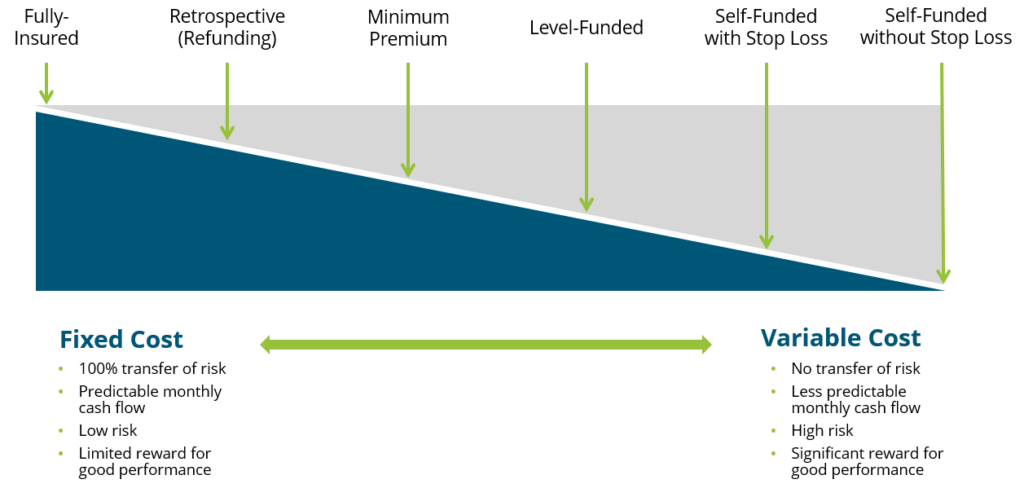
While a fully insured plan largely frees the organization of risk, there is typically a lot of overhead and administrative costs involved and less governance when it comes to claims management. Overall, though, we encourage our clients to consider this spectrum and determine where they fit in related to risk appetite, budget and resources, specific health trend, and more.
2. Financial Management
Related but separate from risk management comes the financial management of your benefits program(s). There are three key activities that fall within this bucket:
- Program Strategy
- Account for long-term costs and variability
- Cost Projections and Rate Setting
- Provide budget updates
- Adjust for economic changes
- Includes premium equivalent rate projections and employee contribution rate setting
- Plan Governance
- Establish framework
- Ensure sufficient reporting and monitoring cadence
- Account for actual versus expected, large claims reporting, key cost drivers, retiree medical valuations, etc.
The insights gleaned from the financial management arm should be embedded into your overall benefits and risk management strategy, rather than live in a silo.
3. Pharmacy
Pharmacy has been top of mind for employers, understandably so given the rapid rise in prescription drug costs, which now constitute anywhere from 20-25% of total healthcare spend in the U.S. Specialty medications account for 50% or more of pharmacy spend even though only about 2% of the population is using them. Brand and generic drug costs are also rising at rates we have not seen in the past, perhaps in correlation with inflation. Suffice it to say, employers are struggling to mitigate their own costs as well as the costs for their employees. So, what can be done?
Within the pharmacy benefits landscape, two areas have been getting a lot of attention: weight loss drugs and biosimilars.
Weight Loss Drugs
Chances are you’ve heard about a new wave of “Hollywood diet” drugs. There has been an enormous amount of marketing going on around these new weight loss drugs, especially in the realm of social media and influencers. All of the buzz has also gotten the attention of employers, who are asking us questions surrounding coverage, costs, and pros and cons.
To provide some background, of the four weight loss drugs taking center stage, only two have indications for weight loss, while the other two are being used off-label. Weight loss drugs are not new, but these varieties are showing results we haven’t seen before, and their arrival on the market is timely, as about 42% of the population is either overweight or obese.
From a health and productivity standpoint, we know that obesity increases a person’s risk of developing a chronic condition, which leads to higher healthcare costs. But we also know that there are financial and non-financial reasons to foster a happy and healthy workforce. Can and should weight loss drugs be an answer for employers?
These new drugs are retailing for about $1,300 a month, so we need to consider annual costs and the longevity of how long an employee will need to stay on the medication. For employers considering them to their plan, we recommend it being one piece of a comprehensive strategy that also includes wellness initiatives and/or a commitment from those prescribed the drug. In addition, you must build strong monitoring protocols to judge effectiveness and impact on overall plan costs and utilization.
The inclusion of weight loss drug coverage in a health plan will make sense for some employer groups, and not others. We recently talked with an employer client who saw enough value in even a 10% reduction in body weight to convince them to cover the drug. However, any decisions need to be based, once again, off of population data and corporate objectives. This is a new and evolving sector, so your strategy should remain fluid as we see developments.
Biosimilars
Biosimilars are non-generic alternatives to those specialized medications that are very targeted in how they work and on what conditions they combat. There has been a lot of anticipation surrounding biosimilars as a solution to the specialty drug cost crisis. At the beginning of the year, a biosimilar of Humira, the number one drug dispensed in the U.S. which is used to treat inflammatory conditions, entered the market as the first biosimilar. While there has been some impact, to date it has not been the silver bullet we were hoping for. We can see below that biosimilar adoption rates are all over the map depending upon the condition for which it’s being utilized.
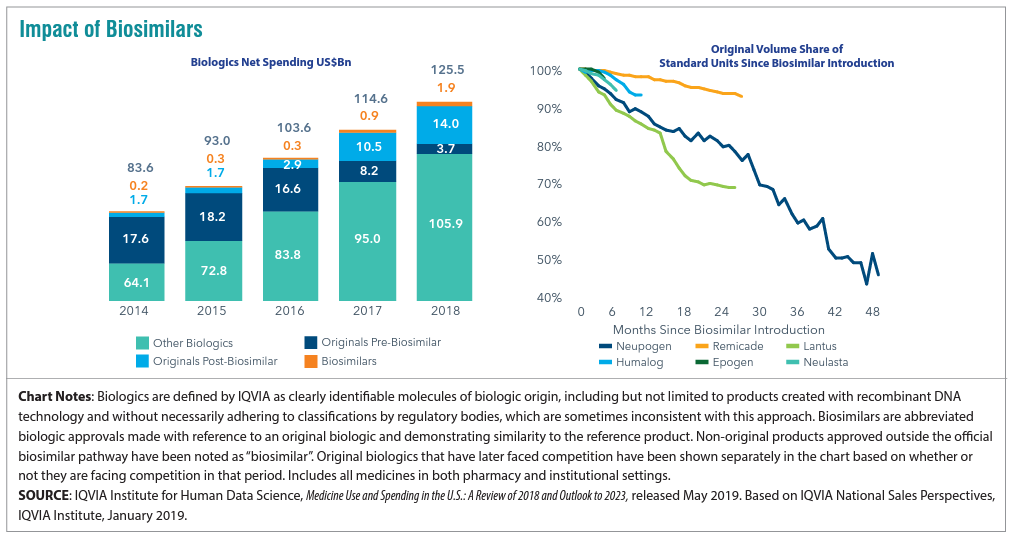
For employers, what’s important is vigilance in understanding where your Pharmacy Benefit manager (PBM) has positioned biosimilars as far as coverage is concerned. We have found that PBMs are placing biosimilars typically at the same parity with the reference, or brand name product. In this case both Humira and its biosimilar would be considered tier 3 medications, which does not yield the anticipated savings. Why is this? Well, there may be additional rebates available to employers and health plans if they continue to use the reference product.
This is a complicated space that continues to change at a rapid pace. Overall, though, if biosimilars are working the way we want them to, we need to figure out a way for all stakeholders to embrace them as a lower cost alternative instead of being locked into brand name drug prices. In some cases, the drugs are life-changing, so we do want to cover them but in a more sustainable way. We work with clients to ensure they are informed of and ready for these advancements and nuances.
4. Targeted Point Solutions
The term “point solutions” now represents a large umbrella of tools, however it typically references programs that target specific diagnoses such as diabetes, oncology, and hypertension. In recent years there has been significantly more interest in point solutions from our employer clients, and, especially with multiple solutions running at a time, these can be a slow leak on spend. Now is a good time to take a step back to answer that risk versus reward question for point solutions.
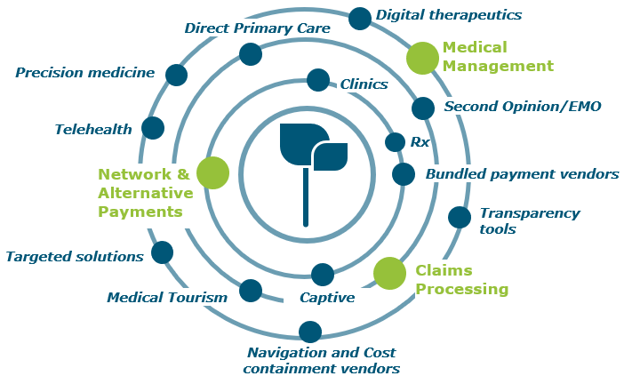
The best place to start in assessing point solutions whose reward outweighs the risk is data analytics. Try to use any data you are getting from your health plan, internal teams, or the industry to benchmark your spend. In areas where your spend is high relative to benchmarks, do a deep dive for potential solutions that can help. Some pitfalls in this area include:
- The more point solutions you implement, the harder they become to monitor and manage
- Point solutions embedded in your health plan may seem like a no-brainer, but they usually yield very low take-up rates
- Overlap between different point solutions/benefits programs can cause confusion for all stakeholders
- Focusing purely on dollar ROI may not be the play; listen to your gut about what is right for your workforce and understand the qualitative advantages around camaraderie and culture to be gained
5. Absence Management
Absence management is highly correlated with your health plan performance, since the vast majority of your high cost claims will also include a leave of absence, so there are both plan costs and productivity rates at play here.
Making absence programs more challenging is the volume of stakeholders involved and laws with which you need to comply (as seen below).
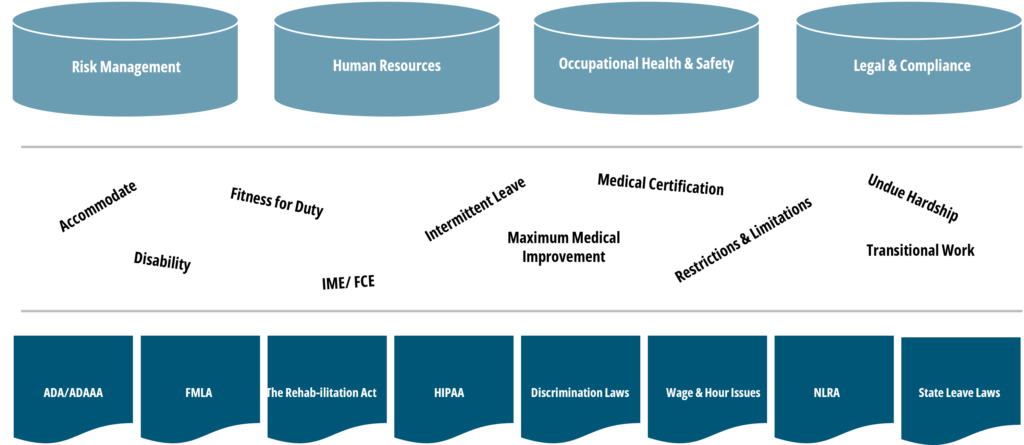
Further, when we talk about absence management, we account for a wide range of benefits including short- and long-term disability, statutory disability, workers’ compensation, FMLA, ADA state paid family and medical leave (PFML), and others.
With absence, different than with medical plans, your company’s managers and supervisors are directly involved when it comes to plan design, governance, staff training, etc., so it is an area where you typically need to look inward to drive change.
When it comes to the risk/reward balance of an absence management program, employers can make sure corporate programs are set up the way they want, for example, promoting the right attraction and retention strategy. Remember that the more generous your programs are, the more they will cost and the higher the risk you take on. If shifting some responsibility to an outsourced partner, be sure you still have monitoring protocols in place.
Closing Thoughts
Across these five areas and more, we encourage you to get familiar with your organization’s plan and demographic data. Depending on your size, the level and depth of data available might be different, but there is always some data available, such as industry standards and benchmarks. Whether you are focused on weight loss drug strategy, funding, or point solutions, you can take those data-driven insights and apply them across these four pillars to determine your best practice.
If you are having trouble getting started, or could use specific guidance surrounding the topics mentioned, please get in touch with our team.