

The political landscape has seen significant developments in healthcare reform, notably with the enactment of the One Big Beautiful Bill Act (OBBBA) on July 4, 2025¹. This legislation introduces changes that may reshape healthcare policies, employee benefits, and overall benefits packages. Understanding these changes is crucial for employers to navigate the evolving landscape effectively¹,².
What Is the “Big Beautiful Bill”?
The “Big Beautiful Bill,” officially known as the One Big Beautiful Bill Act, is a substantial piece of legislation encompassing tax, spending, and healthcare provisions¹,³. The law focuses on deregulation of healthcare, expansion of private insurance options, tax incentives for both employers and employees, and modifications to certain provisions of the Affordable Care Act (ACA)¹,⁴. At its core, the law aims to increase competition and choice in healthcare, with the objective of reducing premiums and expanding access³.
How Will the Bill Impact Employee Benefits?
Changes to ACA Compliance
The OBBBA includes provisions that modify certain aspects of the ACA²,³. While the law does not eliminate the ACA, it introduces changes, such as new reporting requirements for certain Medicaid enrollees and restrictions on federal financial assistance for those enrolled in the ACA Marketplace². Employers offering health insurance may encounter fewer regulatory requirements around employee health plans but could face challenges if employees opt out of company-sponsored coverage due to more affordable individual insurance options or if employees lose government-sponsored coverage³.
Expansion of Health Savings Accounts (HSAs)
The law expands Health Savings Accounts (HSAs) by broadening the definition of a high-deductible health plan (HDHP) to include bronze and catastrophic plans²,³. This allows taxpayers to save and invest more money tax-free for healthcare expenses². For employers, these expanded accounts present an opportunity to provide more customizable healthcare benefits, potentially reducing administrative costs while empowering employees to manage healthcare expenses more effectively³. The OBBBA also designates Direct Primary Care arrangements as qualified medical expenses eligible for HSA coverage within limits².
Shift Toward Private Insurance
The legislation includes adjustments to Medicaid and changes to the ACA marketplace, which may result in fewer individuals relying on government-run plans²,³. This shift encourages employers to refine benefit packages to provide more personalized private insurance options that better align with employee needs³. Increased competition among private insurers may also influence employer-sponsored insurance premiums².
Tax Incentives for Employers
The OBBBA introduces new tax provisions, including a permanent increase to the standard deduction¹,². While healthcare-specific tax incentives for employers are not as clearly detailed as individual tax changes, the general focus on tax relief and cost reduction is intended to encourage companies to reassess benefit offerings and consider new ways to support employee health and well-being².
Potential Impact on Wellness Programs
The law’s emphasis on individual choice and competition may encourage employers to invest more in wellness programs²,³. Health and wellness incentives, such as gym memberships, mental health services, and preventative care, could become more prevalent as employers aim to improve employee health outcomes and reduce long-term healthcare costs³. These programs can also enhance employee engagement and satisfaction².
What Can Employers Do to Prepare?
Given the significant changes brought by the OBBBA, employers should remain informed and proactive. Key strategies include:
- Stay Updated on Legislation:
Employers should regularly monitor updates on the law, particularly regarding ACA regulations, HSA contributions, and tax incentives²,³. Joining professional organizations or subscribing to policy newsletters can help employers stay current. - Review Employee Benefits Packages:
Employers should evaluate current healthcare offerings and consider adjustments to remain competitive and cost-effective, particularly with expanded HSAs and private insurance options²,³. Supplemental private plans or partnerships with brokers may help diversify options for employees². - Communicate with Employees:
Transparent communication is essential. Employers should educate employees on changes to benefits, HSAs, and wellness programs, and explain potential impacts on premiums or out-of-pocket costs²,³. - Consult with Benefits Advisors and Legal Counsel:
Navigating healthcare reform is complex. Consulting advisors and legal counsel ensures compliance and appropriate plan design under the new law²,³. - Prepare for Tax Adjustments:
Employers should reassess benefits strategies to maximize available tax incentives, adjust structures as necessary, and ensure overall compensation remains competitive¹,².
The Road Ahead for Employers
The One Big Beautiful Bill Act has introduced substantial transformations to the healthcare landscape¹,². Its impact on employee benefits is becoming clearer as provisions are implemented. Healthcare is likely to become more individualized, with greater responsibility falling on employers to navigate benefits packages effectively²,³. By staying informed, reassessing offerings, and planning proactively, employers can adapt to the evolving regulatory environment while continuing to support employee health and well-being²,³.
1Congress.gov. (2025). H.R.1 – One Big Beautiful Bill Act 119th Congress (2025-2026). https://www.congress.gov/bill/119th-congress/house-bill/1
2Ballard Spahr. (2025, July 14). The OBBBA’s impact on employee benefits and executive compensation. https://www.ballardspahr.com/insights/alerts-and-articles/2025/07/the-obbbas-impact-on-employee-benefits-and-executive-compensation
3McDermott Will & Emery. (2025, July 7). Employee benefits provisions of the One Big Beautiful Bill Act. https://vitacompanies.com/blog/employee-benefits-provisions-of-the-one-big-beautiful-bill-act
4Johns Hopkins Bloomberg School of Public Health. (2025, July 30). The changes coming to the ACA, Medicaid, and Medicare. https://publichealth.jhu.edu/2025/the-changes-coming-to-the-aca-medicaid-and-medicare
Q1: What does it mean when a company “transfers” pension risk?
At a high level, it means the company is looking to reduce or offload the financial uncertainty tied to its pension obligations. That typically happens in one of two ways: either by offering terminated employees a one-time lump-sum payment, or by transferring the responsibility for future pension payments to an insurance company through the purchase of an annuity contract.
For the company, it’s about getting pension liabilities off the books and reducing exposure to things like interest rate swings, longevity risk, or investment volatility. It’s essentially a financial risk management strategy, but it has big implications for both the balance sheet and the participants.
Q2: Why are so many companies pursuing this right now?
The environment is favorable at the moment and has been for several years. Many pension plans are well or overfunded, partly due to the high interest rate environment, which means the present value of future liabilities has come down. That creates a window of opportunity because it’s more affordable to transfer pension obligations when the plan has a funding cushion.
At the same time, there’s increasing pressure from boards, investors, and regulators to reduce long-term financial volatility. For many employers, especially in sectors like healthcare and manufacturing, pension plans are legacy liabilities that no longer align with current business strategy. Transferring that risk, either to an insurer or through a captive, has become a compelling strategy.
Q3: What are the main ways companies transfer pension risk?
The most common approaches we see are offering lump sums to terminated vested participants or purchasing annuities from insurance companies. Both of these methods shift the liability off the sponsor’s balance sheet, but they come with different timing, regulatory, and cost considerations.
There’s also a “buy-in,” where the pension plan still holds the liability but uses an annuity contract as a hedge to match those obligations. This is often a strategic interim step as a plan approaches termination.
And now, more recently with our guidance, we’re seeing employers explore the use of their own captive insurance companies. While common in Europe, this is a newer development in the U.S. that is gaining traction, especially among organizations with overfunded plans or illiquid assets that would otherwise be penalized in a traditional market transaction. The idea is to retain some control while still taking meaningful steps toward de-risking.
Q4: We’ve heard about using captives in this space. How does that work?
In simple terms, the pension plan purchases an annuity contract from a captive insurance company that’s owned by the employer. The captive then takes on the obligation to pay the retirement benefits, often backed by reinsurance. Structurally, it’s very similar to how employers already fund other ERISA-covered benefits like disability or life insurance through a captive.
We recently worked with a leading cancer research and healthcare institute that already had a Vermont-domiciled captive. We helped them set up a separate cell within the captive specifically for pension risk. The Department of Labor reviewed the structure and granted a prohibited transaction exemption, making it the first ERISA-approved pension transfer into a captive. That approval opened the door for other organizations to explore this approach.
Q5: What’s the advantage of using a captive insurance company for this instead of a commercial carrier?
It gives the employer more flexibility and control. In the case of the healthcare institute mentioned earlier, the commercial insurance market was uncomfortable with the shape of their pension liability and was charging significantly more to take on the risk. By using their captive, they were able to assume the liability internally, with proper fronting and reinsurance, and realize projected financial benefits of over $120 million on the premium alone.
Additionally, our client will be able to transfer the trust assets directly to the captive – avoiding significant haircuts on their illiquid assets.
And they didn’t just keep the savings to themselves. As part of the DOL-approved structure, they used some of those funds to provide a one-time cost-of-living adjustment for retirees. So the outcome benefited both the organization and its participants. That’s the power of this approach. It’s not just about risk transfer — it’s about doing it in a way that aligns with your values and financial goals.
Q6: Are there risks to going the captive route?
There are definitely risks, and the process isn’t simple. When you use a captive to take on pension liabilities, you’re retaining some of the investment and longevity risk, at least in the near term. And because you’re transferring ERISA-covered obligations to a related party, it requires a prohibited transaction exemption from the Department of Labor — which is a highly detailed and rigorous regulatory process.
That said, we had the opportunity to help a major healthcare and cancer research institute become the first organization in history to receive ERISA approval for transferring pension risk into a captive structure. That was a groundbreaking moment. It’s not just a win for that one sponsor — it opens the door for other organizations to approach pension risk more strategically and cost-effectively.
We worked closely with them through every step, from actuarial modeling and structuring the captive cell to direct engagement with the Department of Labor. A big part of the success was treating the captive like a fully functional insurer, with strong governance, appropriate capitalization, and a clear segregation of the pension risk. So yes, there are hurdles, but with the right team and a strong rationale, it’s absolutely achievable — and the precedent we helped set is already starting to shift the landscape for other plan sponsors.
Q7: How do you help clients decide whether a captive makes sense?
It comes down to modeling and understanding the broader context. We look at the plan’s funded status, the company’s risk tolerance, whether a captive already exists, and what types of assets are in the trust.
For example, in the case of the healthcare institute, they had a well-funded plan but also held a significant amount of illiquid investments. If they had gone the traditional route and purchased an annuity in the market, they would’ve needed to liquidate those assets — likely at a loss. Using the captive allowed them to avoid that inefficiency and structure a transaction that worked better from both a financial and operational perspective.
That’s why it’s so important to tailor the solution to the organization’s fact pattern. There’s no one-size-fits-all approach here.
Q8: What’s your advice for companies thinking about this?
My advice is to start with a feasibility study. Even if you’re not planning to move forward immediately, taking the time to assess your options in a structured way can be incredibly valuable. Every pension plan is different — different funding levels, investment profiles, participant demographics, and organizational goals. A feasibility study helps you understand what’s possible based on your unique circumstances.
That process should include working closely with unbiased actuaries and consultants to model out different risk transfer strategies. Whether it’s a traditional annuity purchase, a lump-sum window, or a captive structure, each approach has its own tradeoffs. The right strategy often depends on things like your plan’s funded status, asset mix, existing captive infrastructure, and long-term financial goals.
We’ve found that the earlier sponsors engage in that kind of planning, the more flexibility they have. Even simple steps like cleaning up data or segmenting your liability profile can create opportunities down the line. And if a captive solution is on the table, the earlier you start understanding the regulatory landscape — especially around ERISA exemptions — the better positioned you’ll be.
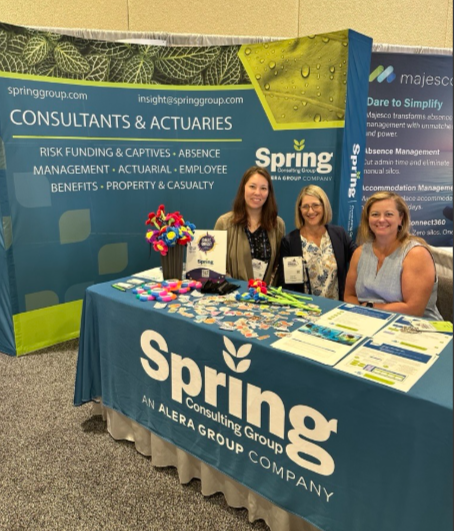
As summer winds down, the Disability Management Employer Coalition (DMEC) hosted its 2025 Annual Conference in vibrant Austin, TX, a city known for its live music, bold flavors, and innovative spirit. The dynamic setting was the perfect backdrop for this year’s conversations around the ever-evolving world of absence, accommodations, compliance, and employee wellness. Professionals from across the industry gathered to unpack new legislation, discuss workplace trends, and explore tech-driven solutions to modern challenges. Here are three key themes that emerged from this year’s conference:
1) Championing Wellbeing
Mental health has been a conference staple in recent years, but 2025 brought a more integrated, human-centered approach. Discussions extended beyond mental illness to resilience, emotional intelligence, caregiving, and holistic employee support strategies. The rise of neurodiversity, trauma-informed leadership, and care-inclusive policies showcased how employers are adapting to meet a broader spectrum of employee needs.
– In the session, “Compassionate Leave: Reimagining Employee Well-Being,” presenters explored how companies are expanding leave programs to support emotional well-being, not just physical health.
– A dynamic discussion titled “Neurodiversity in the Workplace: Employee Expectations and Employer Obligations” highlighted how organizations can create inclusive environments and meet accommodation needs for neurodiverse employees.
– In “Empowering Caregivers in the Workplace: A Collaborative Approach to Well-Being,” panelists shared strategies to support the growing population of working caregivers through benefits design and workplace flexibility.
2) Technology & AI
This year’s sessions made one thing clear: we’re at a true inflection point when it comes to technology. With AI, data integration, and digital tools maturing, organizations are rethinking how leave is managed, from predictive analytics to employee experience platforms. Several thought leaders challenged the industry to balance automation with empathy, and to ensure tech doesn’t come at the cost of compliance or care.
– In the session, “Technology Can Make All Your Absence Dreams Come True … Or It Can Be Your Worst Nightmare!” speakers tackled the pros and cons of tech platforms, with a focus on implementation pitfalls and how to avoid them.
– During “Defining the Future of AI in Absence Management: Review of Think Tank Findings,” presenters walked through key outcomes from a recent industry think tank focused on the ethical use of AI in leave processes.
– The presentation, “There’s an AI for That! The Future of Integrated Absence Management and How AI Connects the Dots,” showcased how leading employers are already using AI to streamline decisions and improve the employee experience.
3) Compliance & Accommodation Strategies
Compliance remains a foundational topic, and this year brought a new level of pragmatic guidance and real-world scenarios. Sessions ranged from ADA accommodations and “good faith” practices to FMLA audits and courtroom insights. The clear takeaway? Employers must remain agile and informed while developing repeatable, scalable compliance frameworks.
– The Preconference Workshop, “Taking Back Your Plan: A Practical Guide for Effective Policy Development,” run by Spring Consulting Group, helped employers navigate federal, state, and local leave laws as they build or update internal policies. We also explored benchmarking strategies and outlined the changes employers need to get their benefit programs back on track.
– In “Recent Jury Verdicts Involving Leave and Accommodation Issues,” a legal expert reviewed real court outcomes to help employers better understand risk and strengthen their policies.
– A panel-led session, “Getting Alice out of Wonderland: How to Address the Realities of Accommodations Management,” shared tactical guidance on how to navigate tricky and often ambiguous accommodation requests.
Final Thoughts
The DMEC 2024 Annual Conference in Nashville was a resounding success, filled with opportunities to learn, connect, and share best practices. From deep dives into compliance and mental health to exploring the latest technological innovations, the conference offered something for everyone. As always, it was a pleasure to reconnect with industry leaders and bring back fresh ideas to enhance our consultative offerings. We’re already looking forward to what next year’s conference will bring!
Title:
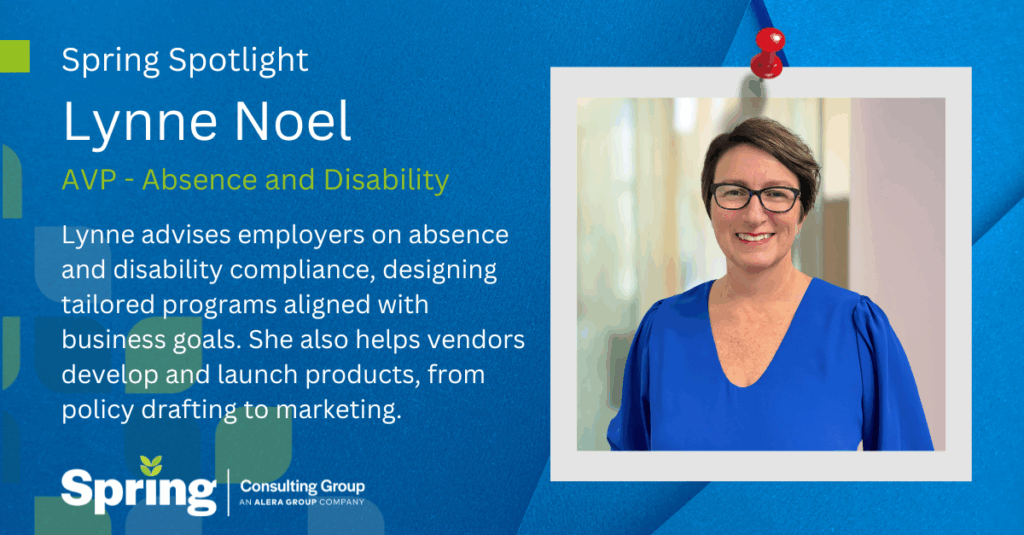
AVP – Absence and Disability
Joined Spring:
I joined Spring in January 2024
Hometown:
Chesterfield, MA (near Northampton)
At Work Responsibilities:
I help employers navigate complex absence and disability laws and develop customized absence and disability programs that are both compliant and strategically aligned with their goals. Simultaneously, I support absence and disability vendors in developing and launching new products, from drafting policy forms to creating marketing collateral.
Outside of Work Hobbies/Interests:
Cycling, pickleball, gardening
Fun Fact:
In high school, my summer softball team made it to nationals 2 years in a row. I was an academic all-American squash player in college.
Do You Have Any Children?
Two amazing adult humans, ages 28 and 25 – and 3 equally awesome grandchildren with a 4th arriving at the beginning of 2026!
Favorite Band/Musician:
I have loved Melissa Etheridge since I played frisbee with her and her band on the lawn of my dorm at Smith College in 1990 and she signed my cassette of her first album! I have seen her in concert at least 20 times.
Favorite Book:
A Gentleman in Moscow
In today’s fast-paced world, the conversation around mental health has taken center stage in workplace wellness initiatives. As employers strive to create a more supportive and resilient workforce, integrating mental health resources into employee benefits and absence strategies has never been more critical.
According to the National Institute of Mental Health, nearly 1 in 5 U.S. adults live with a mental illness1. That number rises significantly among working-age adults, especially in high-stress professions or environments lacking psychological safety and support. This increased prevalence of mental illness leads to more time away from work, reduced ability to perform while present, and an increase disability claims incidence rates.
The Insurance Impact: Disability & Mental Health Claims
From a disability insurance standpoint, behavioral health-related disability claims are a major concern for Benefits and HR teams across the country. Mental health conditions like anxiety, depression, PTSD, and burnout are now among the leading causes of short term and long term disabilities.
A significant area of concern and recent discussion pertains to the common inclusion of a 24-month lifetime limitation for mental health-related claims in long term disability (LTD) policies. The consequence of this provision is that an employee whose disability stems from a mental health condition becomes ineligible for continued LTD benefits after a lifetime combined 24 months, even if they continue to meet the plan’s definition of disability. These limitations stand in contrast to individuals experiencing other types of disability, who are not subjected to an equivalent restriction. While the rationale for such limitations includes mitigating plan risk exposure by capping the duration and encouraging a return to work before prolonged disengagement, these provisions undeniably create a disparity in the treatment of individuals with different types of disabilities. Furthermore, they are frequently perceived as being at odds with the array of mental health initiatives that employers are increasingly implementing to address the escalating incidence of mental health issues within their workforce.
Tools to Help: Leveraging Absence and Benefits Strategy
Employers have the opportunity and, some would argue, the responsibility to take a proactive role in supporting mental health. Integrating meaningful mental health resources into leave and benefits programs is no longer optional. It is a critical business imperative. Leading organizations are stepping up to close the gap in several ways.
1. Employee Assistance Programs (EAPs) and Virtual Behavioral Health Programs
EAPs are often an underutilized resource, despite their potential to have a real, immediate impact. EAPs are employer-sponsored programs that are designed to help support employees’ health habits and well-being. Some common examples include counseling, substance abuse support, financial guidance, and legal advice. By actively promoting EAPs and embedding access points and reminders to employees throughout the leave process, employers can help support an employee’s mental health challenges.
To further assist employees with mental health concerns, employers can offer virtual Behavioral Health programs. These programs can significantly enhance employee mental health by expanding access to care and offering convenient and confidential support from anywhere. This accessibility helps overcome traditional barriers like stigma, travel, and scheduling conflicts, enabling earlier intervention and consistent engagement with mental health services. Ultimately, these programs empower employees to manage their well-being proactively, leading to improved overall health and productivity.
2. Financial Wellness Resources
Financial stress significantly impacts mental health. When employees grapple with issues like debt, budgeting difficulties, or unexpected expenses, they often experience heightened anxiety, reduced focus, and even physical symptoms2. This direct link underscores the importance of addressing financial well-being as a component of overall mental health support.
Employers can play a crucial role by offering financial counseling, whether through specialized vendors or as part of a broader EAP. This type of support helps employees navigate their financial challenges, which in turn can alleviate the associated mental burden. When an employee takes leave for mental health reasons, integrating recovery resources with financial guidance can create a more holistic approach, promoting greater well-being and facilitating a smoother return to work.
3. Integrated Absence Management Programs
Forward-looking integrated absence management programs take a holistic view of why an employee may be absent from work, coordinating federal protections such as the Family Medical Leave Act (FMLA) and the Americans with Disabilities Act (ADA), state leave programs, and employer-specific offerings. Taking an integrated approach not only streamlines compliance, but also allows for early intervention and triage, ensuring that mental health needs are identified and addressed as part of the overall leave experience.
The Bigger Picture: Prevention and Culture
Prevention remains the most cost-effective approach. Employers can have an impact by building a workplace culture where mental health is normalized and where resources are visible and accessible. Communication is also key. In addition to formal programs and benefits, employers can provide employees with education and resources such as Alera Group’s Mental Health Awareness Toolkit, which provides employers with email templates, campaigns, and more to help support employee wellbeing and keep their colleagues informed about what resources they have.
Employers that prioritize mental well-being as part of their overall strategy are seeing positive results across the board. These include shorter claim durations, higher employee engagement, and reduced turnover. Mental health challenges are not going away, and the workplace plays a key role in both creating and addressing these issues. By utilizing tools like EAPs, virtual Behavioral Health programs, financial counseling, and integrated absence programs, employers can reduce the long-term costs and disruptions of behavioral health-related absence, while helping their employees lead healthier lives.
1National Institute of Mental Health (NIMH), “Mental Illness,” 2023. https://www.nimh.nih.gov/health/statistics/mental-illness
2Debrosky, “Why Are Mental Health Disability Claims Denied More Often? Insights from Mark DeBofsky on Main & Wall” 2024. https://www.debofsky.com/articles/denied-mental-health-disability-claims/#:~:text=Most%20long%2Dterm%20disability%20policies,which%20creates%20an%20unfair%20distinction.
3American Psychological Association (APA), “Stress in America: The State of Our Nation,” 2023. https://www.apa.org/news/press/releases/stress
Spring Consulting Group is contracted with the State of Maine to conduct actuarial studies of the Maine Paid Family & Medical Leave (PFML) trust fund. You can read the full press release here.
AARP estimates that there are over 53 million caregivers across the United States1. This equates to roughly 1 in 6 employees providing unpaid care to family members or friends. While caring for loved ones can be deeply fulfilling, it also leads to increased stress, reduced productivity, and higher absenteeism. The ripple effect extends beyond the family unit, as colleagues and employers are also impacted.
To attract and retain top talent, employers have started to reprioritize caregiving benefits. Historically, organizations recognized a gap in child and adult care services, and have responded by offering onsite or nearby care centers along with backup care services to boost presenteeism. While these solutions addressed the immediate logistical challenge of caregiving, they often overlooked the emotional burden on caregiving employees.
Recently, forward-thinking employers have adopted a more holistic approach to caregiving, resulting in a more satisfied and engaged workforce. Caregiving benefits commonly fall into five categories: time off, financial support, referral services, care centers, and emotional support.
Time Off: This includes enhanced policies for parental or family leave and flexible work arrangements like hybrid or remote work, which allow employees to better manage their caregiving responsibilities. Employers may provide additional leaves on top of federal or stated mandated requirements.
Financial Support: Employers may offer stipends, dependent care assistance plans, subsidized child or backup care, or financial incentives linked to broader employee benefits, such as Health Savings Accounts or maternity care programs.
Referral Services: For employers with limited budgets, services such as care navigation, employee assistance programs (EAPs), and educational resources can offer significant support.
Care Centers: Larger employers with a geographically concentrated workforce may continue to offer onsite childcare centers or partner with external providers for backup child and adult care. This is particularly vital in regions with long childcare waitlists, an issue worsened by the COVID-19 pandemic when many in-home daycare providers did not reopen2.
Emotional Support: Perhaps the most critical, this category includes coaching, support groups, and integration with mental health services. While much attention is given to the transition into parenthood, fewer resources exist for employees who must care for aging parents with declining health, a role that can be devastating and isolating without proper support.
Though the return on investment (ROI) for caregiving benefits can be difficult to quantify, many employers find it results in reduced turnover, increased employee satisfaction, and fewer unplanned absences. This may also be an important benefit when working to recruit new employees. A phased approach that begins with lower cost options, builds awareness, and later expands the benefit offerings can be an effective strategy for organizations beginning this journey.
While caregiving support is advisable for all employers, it becomes essential when employee loyalty and work-life balance are core aspects of your company culture. Additionally, caregiving benefits can be a valuable negotiation point in union discussions, particularly when retention is a shared concern, and the workforce includes those in the “sandwich generation”—employees caring for both young children and aging parents3.
The easiest and fastest way to show you are a caring employer is simple. Care for your caregivers.
1AARP. (2020). Caregiving in the U.S. https://www.aarp.org/ppi/info-2020/caregiving-in-the-united-states.html
2Center for American Progress. (2021). The Child Care Crisis Causes Job Disruptions for More Than 2 Million Parents Each Year. https://www.americanprogress.org/article/child-care-crisis-causes-job-disruptions-2-million-parents-year/
3Pew Research Center. (2013). The Sandwich Generation: Rising Financial Burdens for Middle-Aged Americans. https://www.pewresearch.org/social-trends/2013/01/30/the-sandwich-generation/
Substance use disorder (SUD) is often discussed in relation to student health and wellness across colleges and universities. Just as important, but sometimes overlooked, are faculty, administrators, and staff who may be silently struggling with substance use or supporting loved ones who are.
When schedules are demanding and support systems may be limited, institutions can better support their workforce by offering comprehensive and stigma-free solutions related to SUD and recovery.
Understanding Substance Use Disorder
Substance use disorder is a chronic condition affecting millions of Americans. It’s often characterized by the compulsive use of substances such as alcohol, prescription medication, or illicit drugs despite harmful consequences, with impacts felt across all socioeconomic, professional, and educational backgrounds.
According to the National Survey on Drug Use and Health, about one in eleven full-time workers struggles with SUD, and nearly 12 percent of U.S. adults live with someone in recovery. ¹
Why It Matters
Workplace cultures that reward overworking, multitasking, and perfectionism may add to the pressure. In education specifically, faculty and staff may silently manage stress or avoid disclosing personal struggles out of fear for their careers or a desire to prioritize student health. Since academic institutions influence the broader community, unaddressed employee struggles can impact student experience, productivity, and retention.
Supporting recovery is more than a wellness initiative, it is a cultural responsibility and a strategic investment in employee wellbeing.
What Recovery-Supportive Workplaces Can Offer
Limitless options exist in supporting employees with substance use disorders or those who are caregivers for family and friends with similar challenges. The most common is to provide programs that focus on this area, but perhaps even more important is to foster a culture that allows employees to take advantage of these programs and feel supported.
Programs that should be considered include, but not be limited to, the following:
Employee Assistance Programs (EAPs)
EAPs can provide free counseling, treatment referrals, and crisis support. Promoting awareness and confidentiality is essential to building trust in these services.
Recovery-Focused Benefits Platforms
Some employers partner with vendors to provide treatment matching, sobriety coaching, medication-assisted treatment, and caregiver resources.
Flexible Leave Policies
Non-punitive leave for treatment and recovery can make it easier for employees to seek help. Review existing policies to ensure they support behavioral health needs.
Caregiver Support
Employees supporting a loved one through addiction need resources, too. Solutions that offer navigation support, stress management, and mental health care can ease the burden.
Training for Managers and HR
Educating leadership on how to recognize signs of SUD and refer employees to resources ensures the first response is supportive, not disciplinary.
Campus Recovery Communities
Some colleges have launched employee recovery groups or partnered with local organizations like AA or NA to provide safe, supportive spaces.
Breaking the Stigma
Regardless of the programs implemented, the culture within your organization can directly impact success. Stigma remains one of the greatest barriers to seeking help. Misconceptions that SUD is a moral failing rather than a health condition prevent many from accessing support. This is especially true in academia, where self-sufficiency and achievement are often prioritized.
Using person-first language—such as “person with a substance use disorder” instead of “addict”—can help humanize and normalize these experiences. Institutions that model this language in policy and communication help shift the culture.
If this bias exists, it likely extends beyond SUD to all mental health or substance use concerns. Therefore, adopting a culture that actively works to break the stigma will help all employees.
1Substance Abuse and Mental Health Services Administration. 2022 National Survey on Drug Use and Health (NSDUH).
2SAMHSA National Helpline: https://www.samhsa.gov/find-help/national-helpline
3Shatterproof Treatment Atlas: https://treatmentatlas.org
Rapidly emerging technologies are now guiding patients through the complexities of the healthcare system and helping them receive care that best fits their individual needs. Artificial intelligence (AI) is being used to bridge gaps in healthcare access by supporting patient navigation, ensuring patients understand their options and are directed to the most appropriate providers, care settings, and treatment paths. Although many tools are working behind the scenes, the benefits to patients and providers are vast, but must be carefully monitored to avoid inadvertent consequences.
Patient Data Management
Electronic health records (EHRs) store vast amounts of information, much of which is unstructured. Natural language processing (NLP), a subset of AI, can interpret and extract meaningful insights from these notes, making them useful for predicting diagnoses and delivering individualized care recommendations. This significantly improves data accessibility, especially when extracting information from scanned documents, which have long posed challenges. It also contributes to cost reduction and enhanced care quality. The ability to mine patient data will allow providers to more quickly assess care and make recommendations, sometimes based on systematic analysis.
Automated Communication
AI-powered chatbots and virtual health assistants are transforming communication in healthcare, enabling instantaneous, 24/7 interactions that improve patient engagement. These tools can respond to routine inquiries, offer care options, provide health advice, and remind patients about appointments or medications. This kind of around-the-clock support enhances convenience and personalization, making healthcare navigation more user-friendly and patient-centric.
Provider Matching and Scheduling
AI-driven scheduling platforms and algorithms help patients identify and access the most appropriate healthcare services while also improving operational efficiency for providers. These tools match patients with in-network providers based on personalized criteria such as location, insurance, and specialty. AI and machine learning applications can find appointment slots that meet patient needs, factoring in provider availability and urgency of care. One powerful feature is real-time adaptability, which enables appointment reallocation to accommodate urgent cases with minimal disruption. The result is reduced wait times, better resource allocation, greater transparency, and improved patient satisfaction.
AI Detection
AI is highly effective in identifying patterns and correlations to aid in the prediction and diagnosis of diseases. Several case studies highlight AI’s growing role in early detection and risk prediction for conditions such as cancer, diabetes, and heart disease, as well as other chronic illnesses. As machine learning and NLP algorithms are exposed to more data, their accuracy and reliability continue to improve. Early identification helps shape the course of treatment and enables timely intervention. Another cutting-edge advancement is symptom analysis and virtual triage, where patients can conduct self-assessments and receive guidance on when and where to seek care. This empowers patients with accessible information and helps reduce unnecessary visits to the emergency room.
The Future of AI-Powered Care Navigation
The use of AI in healthcare navigation will continue evolving and further revolutionize the patient experience. One major trend is the movement toward highly personalized care, with AI tailoring guidance to each patient’s unique needs. Future developments may include enhanced AI features in medical imaging for diagnostics and greater integration with wearable health monitoring technologies. While AI-powered navigation tools have already made significant progress, there remains vast potential to further streamline the patient journey and break down access barriers. This will ensure timely, effective, and patient-centered care.
Source: Maleki Varnosfaderani, S., & Forouzanfar, M. (2024). The Role of AI in Hospitals and Clinics: Transforming Healthcare in the 21st Century. Bioengineering (Basel, Switzerland), 11(4), 337. https://doi.org/10.3390/bioengineering11040337