

Menopause support has rapidly shifted from a taboo topic to a fast-growing area of interest in an employer’s benefits offering, driven by workforce demographics, productivity risk, and a wave of specialized digital health platforms.
Menopause impacts most women between the ages of 40 and 58. Symptoms may range from hot flashes, joint pain, headaches, and fatigue to anxiety, insomnia, brain fog, and memory lapses. Women facing these challenges make up a significant portion of the workforce, with women aged 45 to 64 accounting for approximately 17.5% of the workforce according to the Department of Labor. Women going through perimenopause or menopause often experience these symptoms without support options from their employer, leading to missed workdays and loss of productivity at what may be a pivotal time in a person’s career. Studies estimate that menopause-related symptoms cost employers billions annually due to lost productivity and absenteeism, with many employees reporting reduced performance or considering leaving the workforce altogether.¹ Recent analysis from Forbes further emphasizes that organizations supporting employees through menopause may see improved retention, engagement, productivity, and overall workforce wellbeing, reinforcing menopause support as both a health and business strategy.²
Support for women going through menopause may take several forms.
- Menopause Leave or Time Off Programs: Employers are beginning to explore and launch designated time off programs for employees needing time away from work due to symptoms related to menopause that may not be covered or recognized under other leave policies. Recent developments also highlight the growing momentum behind menopause workplace accommodations. For example, Hone Health recently launched its “Menopause Time Off (MTO)” initiative, advocating for menopause-inclusive leave policies and workplace flexibility.³
- Telehealth with Menopause-Trained Clinicians: In today’s healthcare landscape, many individuals face fragmented care across primary care, mental health, and OB-GYN providers. Traditional care models often lack specialized menopause training, leading to underdiagnosis or undertreatment. Telehealth programs may assist in bridging this gap by providing holistic care plans designed specifically for the individual. Employers can access menopause support either through standalone point solutions (e.g., Midi Health) or through enhancements within existing medical or telehealth offerings. It is important to note that some solutions may already be covered under current insurance plans. Telehealth does not need to focus only on establishing care plans. These services may also expand to prescription treatment, virtual physical therapy, mental health support, and additional specialized services.
- Inclusion of Hormone Therapy in Medical Plans: Menopause Hormone Therapy (MHT) can be a beneficial approach for treating common symptoms of menopause such as hot flashes and bone loss. Hormone therapy should be tailored to each individual’s needs. Insurance typically covers FDA-approved formulations, but the specifics of the plan will dictate how much an employee will pay and the exact requirements for coverage. Patient assistance programs may also help individuals cover the cost of non-covered services or prescriptions.
- Education, Community, and Peer Support: Additional support programs may also benefit women facing the challenges associated with menopause. While standalone programs are beginning to expand, support may already be available to employees through existing programs such as EAPs or mental health benefits. In addition, organizations such as the Menopause Education Center focus entirely on educating employers and their workforce and helping organizations build a workplace-friendly menopause strategy. Efforts should also focus on reducing stigma around menopause and training front-line managers on when to direct employees to designated resources.
As employers have invested heavily in fertility and family-building benefits, menopause is emerging as the next frontier in women’s health equity. While the adoption of menopause-focused benefits is still in its early stages, the expansion of these programs is expected to accelerate rapidly.
Employers evaluating menopause benefits should take several steps:
- Audit current benefit offerings (EAP, telehealth, medical coverage, leave programs)
- Identify gaps in clinical and emotional support
- Define a preferred strategy (enhance current offerings or implement a standalone solution)
- Pilot or phase implementation of the preferred solution
- Communicate resources clearly to employees
The first step should be to understand what benefits already exist that support women going through this period of life and communicate those benefits effectively to employees, underlining the employer’s commitment to a holistic benefits program. If additional support is needed, employers should evaluate their broader strategy and work to implement solutions in coordination with preferred partners.
Overall, employers should consider the real impact menopause may have on employees and business operations. Building upon existing benefits offerings can support attraction and retention efforts, strengthen equity and inclusion initiatives, and serve as an important component of a holistic employee benefits strategy.
1Department of Labor workforce demographic data and various studies on menopause-related productivity and absenteeism trends in the workplace.
2Michelle Travis, “The Business Case for Supporting Employees Through Menopause,” Forbes, June 4, 2024.
https://www.forbes.com/sites/michelletravis/2024/06/04/the-business-case-for-supporting-employees-through-menopause/
3Hone Health, “Hone Health Launches Menopause Time Off (MTO).”
https://honehealth.com/edge/hone-health-launches-menopause-time-off-mto/
The Rise of Digital Payments
When a disability or paid leave claim is filed, it is rarely just an administrative transaction. It typically coincides with a moment of personal disruption, such as an illness, injury, parental bonding, caregiving event, or recovery period that temporarily removes an employee from work. In those moments, the timely delivery of income replacement benefits can be critical to financial stability, recovery, and trust in the system.
Expectations around how paid benefits are delivered are changing quickly. While job protection programs and unpaid leave often center on compliance and eligibility, income replacement programs introduce a different set of expectations. For disability insurance, paid family and medical leave, and other employer-sponsored wage replacement benefits, speed, certainty, and convenience are no longer viewed as enhancements. They are fundamental to the claimant experience.
As employees grow accustomed to real-time financial tools in their daily lives, traditional check-based processes and delayed disbursements can feel increasingly out of step with the purpose of paid leave and disability coverage. When benefits are intended to replace wages, delays can weaken the financial security these programs are designed to provide.
Digital disbursement options, such as direct bank transfers (ACH), push-to-card payments, and digital wallets, allow insurers to deliver funds within minutes. This shift reflects broader industry movement toward faster, more connected payment ecosystems.¹ This is not just about technical efficiency; it is about empathy. Research shows that 83 percent of consumers would consider switching carriers after a poor claims experience, reinforcing how central the payment moment has become to trust and retention.³
How it Impacts Employers
For employers, the modernization of claim payments is a critical component of workforce stability and administrative efficiency. When an employee is dealing with a claim, whether it is for workers’ compensation, disability, or personal property loss, their focus is split between recovery and financial obligations.
- Employee Financial Wellness: Delayed payments create unnecessary stress for employees. Faster access to funds allows them to settle medical bills or repair essential property sooner, helping them return to productive routines more quickly.
- Reduced HR Burden: Modern payment systems provide automated notifications and transparency. This significantly reduces the time HR and benefits teams spend acting as intermediaries or answering “Where is my check?” inquiries.
- Operational Resilience: During large-scale events or natural disasters, traditional mail can be disrupted for weeks. Digital payments ensure that benefits reach employees regardless of location or the state of local infrastructure.
What should Employers Do
Modernizing payment infrastructure should be viewed as an essential business strategy rather than a simple technology project. Broader financial system evolution is accelerating expectations for speed, connectivity, and flexibility across how money moves.²
To position your organization for success, consider the following steps:
- Adopt Digital Payment Technologies: Carriers should proactively embrace modern digital payment solutions—such as push‑to‑debit, real‑time payments (RTP), and other instant disbursement methods—by embedding these capabilities into their claims and payment workflows to improve speed, accuracy, and experience.
- Assess Carrier Payment Capabilities: When reviewing insurance partners, encourage employers to discuss and explore the payment capabilities currently available, including instant options such as push‑to‑debit or real‑time payments (RTP), in addition to standard ACH.
- Ensure Integration Readiness: Employers should confirm their HR and payroll systems can readily integrate with carrier claims and payment platforms—such as supporting API connectivity or standardized data feeds—so they can seamlessly receive claim and payment information once carriers deploy modern digital payment solutions.
- Educate Claimants Early: Set expectations by highlighting available digital payment options during claim intake and, where possible, in advance of filing a claim. Encouraging employees to select payment preferences early helps ensure timely, smooth delivery once benefits are approved.
- Prioritize Advanced Security: All stakeholders should work with IT and compliance teams to ensure platforms are protected by state‑of‑the‑art cybersecurity controls—such as strong encryption, multi‑factor authentication, and continuous monitoring—to safeguard employee financial data.
At its core, a claim is not just a reimbursement event. It is a test of how well an organization supports someone during disruption, where speed, clarity, and ease can either stabilize or intensify the experience.
The market is moving clearly toward faster, more connected, and expectation-driven payment ecosystems, while tolerance for delays and friction continues to decline. What was once an administrative step has become a defining moment in the customer relationship.
As a result, employers and carriers that modernize disbursement capabilities are not just improving efficiency. They are aligning with where the industry is heading and meeting expectations that are quickly becoming standard. In this environment, fast, reliable access to funds is no longer a differentiator. It is a baseline expectation and a reflection of trust, responsiveness, and credibility.
1One Inc. 12 Insurance and Payments Trends Shaping 2025.
https://www.oneinc.com/resources/blog/12-insurance-and-payments-trends-shaping-2025
2PYMNTS. Banks Hire Chain Jugglers to Drive Cross-Chain Financial Services.
https://www.pymnts.com/blockchain/2026/banks-hire-chain-jugglers-to-drive-cross-chain-financial-services/
3InvoiceCloud. InvoiceCloud Research: 83% of Consumers Surveyed Would Switch Insurance Carriers After a Poor Claims Experience.
https://invoicecloud.net/press-room/invoicecloud-research-83-of-consumers-surveyed-would-switch-insurance-carriers-after-a-poor-claims-experience
Overview
Leave planning is becoming a central component of absence management strategy. As workforce expectations evolve and leave programs grow more complex, employers are placing greater emphasis on tools that improve clarity, coordination, and overall employee experience.
At the same time, the market for “leave planning tools” is expanding rapidly. Carriers, third-party administrators (TPAs), and technology vendors are introducing new solutions, often using similar terminology to describe very different capabilities. This lack of consistency makes it difficult for employers to evaluate options and determine what is appropriate for their organization.
A structured, objective perspective can help employers navigate the evolving leave planning landscape, from understanding key concepts and market trends to evaluating integration, governance, and organizational readiness.¹
Defining Leave Planning
Leave planning has historically been managed through a combination of policy documents, HR guidance, and manual coordination. Employees were often responsible for navigating multiple sources of information, while employers managed compliance and administration behind the scenes.
Today, expectations have shifted. Leave planning is increasingly understood as a structured process supported by technology, designed to provide employees with clear guidance and to improve coordination across stakeholders.
There is no single definition of leave planning. For some organizations, it may involve providing centralized access to information. For others, it includes personalized guidance, workflow coordination, or integration with broader HR systems.
Importantly, the effectiveness of a leave planning solution is not determined solely by its level of sophistication. Employers must assess how well a tool aligns with their existing processes, systems, and organizational priorities. This requires a clear understanding of the problem being solved and the outcomes the organization is trying to achieve.
Market Trends Driving Adoption
Several factors are contributing to increased interest in leave planning tools.
- Employee Expectations: Employees expect clear, timely, and accessible information when planning for leave. An unclear experience can lead to confusion and dissatisfaction.
- Program Complexity: The growth of state-specific leave requirements, combined with employer-sponsored benefits, has increased the complexity of absence management. Coordinating these programs manually is increasingly difficult.
- Technology Advancement: Digital platforms and improved user experience design have enabled more advanced tools. However, capabilities vary significantly across vendors.
- Increased Demand with Practical Constraints: Employers increasingly view gaps in leave planning capabilities as a limitation. However, implementation may be constrained by cost, integration complexity, and limited internal capacity or technical skill sets. As a result, selecting the right solution is often a strategic and operational decision, not just a technical one.
The Expanding Role of AI in Leave Planning
Artificial intelligence is beginning to influence the development of leave planning tools. Some solutions incorporate AI to provide personalized guidance, generate timelines, or recommend next steps based on employee-specific inputs. These capabilities can improve efficiency and enhance the employee experience. However, they also introduce new considerations, specifically when automated outputs begin to influence decisions or actions related to employment.
Employers should evaluate how these tools function, what data they rely on, and how outputs are generated. The value of AI depends on how well it aligns with business objectives and how effectively it is governed within the organization. Regulators increasingly expect automated HR tools to be transparent, fair, and accountable.²
Emerging Risks and Compliance Considerations
As leave planning tools evolve, particularly those incorporating automation or AI, employers must consider a broader set of risks.
Bias and Disparate Impact
The U.S. Equal Employment Opportunity Commission has highlighted that automated tools used in employment-related contexts may introduce the risk of unintended bias and disparate impact, even when used for advisory purposes.²
Jurisdictional Requirements
Certain jurisdictions have introduced regulations related to automated employment decision tools. For example, New York City Local Law 144 requires bias audits and transparency for covered automated employment decision tools.² While not all leave planning tools fall directly within these requirements, the regulatory environment continues to evolve.
Governance Frameworks
Organizations may benefit from structured approaches to managing risk. The National Institute of Standards and Technology provides guidance through its AI Risk Management Framework, which outlines governance, mapping, measurement, and management practices.³
Employers should ensure appropriate governance structures are in place to support responsible use, transparency, and oversight.
Understanding the Capability Spectrum
Leave planning tools vary widely in functionality. A structured view of capabilities helps employers evaluate fit more effectively.
- Informational Guidance: Provides access to policies, eligibility criteria, and general timelines.
- Personalized Planning: Delivers tailored guidance based on employee inputs such as timelines and benefit estimates.
- Collaborative Planning: Enables coordination between employees, HR, and managers through shared workflows.
- Integrated Operational Planning: Connects with HR systems, payroll, and case management platforms to enable automated workflows and end-to-end process execution.
Understanding where a solution falls within this spectrum is essential for setting expectations and evaluating fit.
Considerations by Employer Size
The appropriate level of leave planning capability varies based on organizational size and complexity.
- Small Employers: Often prioritize simplicity and ease of implementation. Foundational tools may be sufficient when supported by external partners.
- Mid-Market Employers: Typically require structured solutions that improve coordination while remaining operationally manageable.
- Large and Jumbo Employers: Often require integrated solutions that scale across local and multi‑state regulatory jurisdictions and diverse employee populations, with emphasis on automation, governance, and system connectivity necessary to support compliance.
Alignment between solution capabilities and organizational needs is critical across all segments.
Key Questions for Employers
Before selecting or implementing a leave planning tool, employers should evaluate:
Business Needs
What problem is the organization trying to solve?
How will this improve employee experience or operational efficiency?
Integration and Fit
How will the solution connect with existing systems and workflows?
What operational changes will be required?
Data, Privacy, and Governance
What data is required and how is it managed?
What governance structures are needed to oversee usage?
Partner Alignment
What capabilities do current partners offer today?
How are those capabilities expected to evolve?
Organizational Readiness
Does the organization have the resources to support implementation?
Are employees and managers prepared to adopt the tool?
These considerations help ensure decisions are grounded in organizational priorities rather than market positioning.
The LEAVE Framework
To support structured evaluation, employers may apply the LEAVE framework:
L – Lifecycle Fit
Alignment with the full leave lifecycle from planning through return to work.
E – Experience and Equity
Consistency of the employee experience and consideration of equitable outcomes.
A – Architecture and Data
Integration with existing systems and management of data.
V – Vendor and Verification
Vendor maturity and the presence of validation or audit processes.
E – Ethics, Compliance, and Enablement
Alignment with regulatory expectations and the organization’s ability to govern and support the tool.
This framework provides a consistent approach for evaluating capability, risk, and organizational fit.
- Organizational Readiness: Successful implementation depends on more than selecting the right tool.
- Operational Readiness: Alignment with workflows and internal processes.
- Technical Readiness: Feasibility of integration with existing systems.
- Governance Readiness: Establishment of oversight structures to manage risk and compliance.
- Workforce Enablement: Clear communication, training, and change management for employees and managers.
Organizations that address readiness early are better positioned to achieve sustainable outcomes.
Conclusion
Leave planning tools are reshaping how organizations manage absence and support employees. While the market continues to evolve, variability in definitions, capabilities, and governance expectations will remain a central challenge.
Employers that take a structured approach grounded in clear objectives, disciplined evaluation, and organizational readiness will be better equipped to select solutions that deliver meaningful operational and employee experience value.
1U.S. Equal Employment Opportunity Commission. Guidance on artificial intelligence and algorithmic fairness in employment-related decision-making, emphasizing employer responsibility under civil rights laws.
2New York City Local Law 144. Requires bias audits, transparency, and notice for covered automated employment decision tools used in employment contexts.
3National Institute of Standards and Technology. AI Risk Management Framework (AI RMF 1.0), providing governance and risk management guidance for AI systems.
Executive Summary
Absence management programs are under increasing pressure from regulatory expansion, workforce complexity, and heightened employee expectations. Traditional operating models, reliant on manual case handling and fragmented systems,are no longer sufficient at scale. Artificial intelligence (AI) is emerging as a practical enabler, not as a replacement for human expertise, but as a mechanism to improve consistency, efficiency, compliance, and the overall employee experience. This is being accomplished through both operational execution and technology development, and points toward a more streamlined ecosystem in the near and longer-term future.
The Operational Impact of AI in Absence Management
Shifting from reactive case handling to guided employee journeys
Operational friction in absence programs is highly predictable. Intake errors, incomplete documentation, repetitive employee inquiries, and complex policy interactions account for a significant share of administrative burden. AI-powered conversational tools are increasingly deployed to manage these high-volume, low-variability interactions.
Rather than replacing case managers, however, AI can enable guided leave journeys —helping employees initiate requests, understand requirements, and receive timely updates without needing repeated human intervention. It can also improve clarity and consistency while reducing call volume and manual effort.
Reducing cycle times through targeted automation
Absence operations involve extensive repetitive work: generating notices, tracking deadlines, verifying completeness, and summarizing case histories. AI-driven automation can support these tasks by drafting correspondence, flagging missing information, and consolidating timelines for faster review.
Organizations such as the International Foundation of Employee Benefit Plans (IFEBP) emphasize that AI adoption in leave management is increasingly focused on speed, accuracy, and employee understanding, not simply cost reduction. Many vendors are therefore responding by embedding AI directly into absence workflows rather than positioning it as a standalone tool. The operational result is improved throughput, fewer reopenings, and more predictable outcomes.
Enabling proactive workforce planning
Historically, absence management has been reactive: organizations respond after a leave occurs. AI can enable predictive insights, including forecasting absence likelihood and duration to support staffing and coverage planning. Machine learning models can identify absence patterns and duration risk, while also emphasizing the need for validation, explainability, and ethical safeguards. When used appropriately, these insights support planning and early intervention, and improved workforce scheduling and roster stability.
Strengthening compliance and risk controls
Absence and disability programs have inherent compliance risk, and can be subject to inconsistent decision-making, and financial leakage. AI techniques long used in insurance, such as anomaly detection and predictive flagging, can be applied to help focus investigative and quality assurance resources. Crucially, these tools are designed to surface risk signals, not replace human judgment. Oversight will remain essential, particularly in medically and legally sensitive cases.
Technology Development Trends Shaping the Future
Natural language as the primary interface
Absence management is policy-intensive and emotionally complex, making it well suited for natural language systems. Modern platforms are building AI capable of interpreting employee questions, retrieving relevant policy language, and providing clear explanations—while escalating uncertainty to human specialists. While trust is foundational, effective systems are able to prioritize:
- Policy-source transparency
- Clear escalation paths
- Guardrails that prevent overreach
- Empathetic, employee-appropriate language
Intelligent document processing
Medical certifications and eligibility documentation remain unavoidable. Next-generation platforms are moving beyond digitization to document intelligence—extracting structured data, identifying missing elements, and summarizing key information automatically. This can reduce reviewer fatigue and improve consistency across cases.
Predictive analytics with governance
Predictive absence models are transitioning from experimentation to production. However, research in absenteeism prediction underscores the importance of bias testing, explainability, and appropriate use boundaries. Leading organizations are therefore pairing predictive analytics with governance frameworks that define acceptable use cases, monitor outcomes, and ensure privacy-by-design principles.
What Organizations Can Expect
In the near term, or over the next one to three years, the absence industry can expect to see a number of enhancements in the way that insurance carrier and third-party administrator (TPA) service models are operating as a result of AI utilization, such as:
- AI copilots supporting case managers with summaries, next-step guidance, and draft communications
- Employee-facing AI assistants embedded into delivery models
- Expanded use of predictive analytics for staffing and capacity planning
- More sophisticated fraud and leakage detection adapted from insurance analytics
In the longer term, the most significant shift is anticipated to be architectural. Absence, disability, payroll, and HRIS systems will increasingly operate as better orchestrated ecosystems, with AI coordinating workflows across platforms. Additionally, organizations can expect continuous compliance models, where policy changes are proactively tested against real scenarios and documented automatically reflecting broader AI governance trends in what has become an increasingly regulated and ever-changing industry.
Conclusion
AI is not transforming absence management by eliminating human involvement. Instead, it is enabling human-centered, scalable operating models that can reduce administrative burden, surface risk earlier, and improve the employee experience without sacrificing compliance or judgment.
In a recent article featured on the New England Employee Benefits Council (NEEBC)’s blog, our Consultant, Grace Giannattasio, provides a state-by-state update on PFML changes in 2026 in the New England area. You can find NEEBC’s full article here.
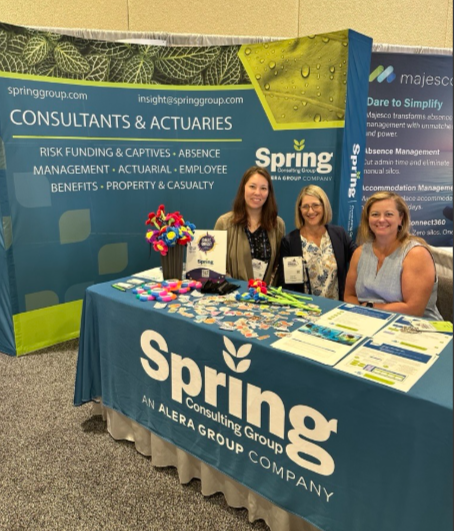
As summer winds down, the Disability Management Employer Coalition (DMEC) hosted its 2025 Annual Conference in vibrant Austin, TX, a city known for its live music, bold flavors, and innovative spirit. The dynamic setting was the perfect backdrop for this year’s conversations around the ever-evolving world of absence, accommodations, compliance, and employee wellness. Professionals from across the industry gathered to unpack new legislation, discuss workplace trends, and explore tech-driven solutions to modern challenges. Here are three key themes that emerged from this year’s conference:
1) Championing Wellbeing
Mental health has been a conference staple in recent years, but 2025 brought a more integrated, human-centered approach. Discussions extended beyond mental illness to resilience, emotional intelligence, caregiving, and holistic employee support strategies. The rise of neurodiversity, trauma-informed leadership, and care-inclusive policies showcased how employers are adapting to meet a broader spectrum of employee needs.
– In the session, “Compassionate Leave: Reimagining Employee Well-Being,” presenters explored how companies are expanding leave programs to support emotional well-being, not just physical health.
– A dynamic discussion titled “Neurodiversity in the Workplace: Employee Expectations and Employer Obligations” highlighted how organizations can create inclusive environments and meet accommodation needs for neurodiverse employees.
– In “Empowering Caregivers in the Workplace: A Collaborative Approach to Well-Being,” panelists shared strategies to support the growing population of working caregivers through benefits design and workplace flexibility.
2) Technology & AI
This year’s sessions made one thing clear: we’re at a true inflection point when it comes to technology. With AI, data integration, and digital tools maturing, organizations are rethinking how leave is managed, from predictive analytics to employee experience platforms. Several thought leaders challenged the industry to balance automation with empathy, and to ensure tech doesn’t come at the cost of compliance or care.
– In the session, “Technology Can Make All Your Absence Dreams Come True … Or It Can Be Your Worst Nightmare!” speakers tackled the pros and cons of tech platforms, with a focus on implementation pitfalls and how to avoid them.
– During “Defining the Future of AI in Absence Management: Review of Think Tank Findings,” presenters walked through key outcomes from a recent industry think tank focused on the ethical use of AI in leave processes.
– The presentation, “There’s an AI for That! The Future of Integrated Absence Management and How AI Connects the Dots,” showcased how leading employers are already using AI to streamline decisions and improve the employee experience.
3) Compliance & Accommodation Strategies
Compliance remains a foundational topic, and this year brought a new level of pragmatic guidance and real-world scenarios. Sessions ranged from ADA accommodations and “good faith” practices to FMLA audits and courtroom insights. The clear takeaway? Employers must remain agile and informed while developing repeatable, scalable compliance frameworks.
– The Preconference Workshop, “Taking Back Your Plan: A Practical Guide for Effective Policy Development,” run by Spring Consulting Group, helped employers navigate federal, state, and local leave laws as they build or update internal policies. We also explored benchmarking strategies and outlined the changes employers need to get their benefit programs back on track.
– In “Recent Jury Verdicts Involving Leave and Accommodation Issues,” a legal expert reviewed real court outcomes to help employers better understand risk and strengthen their policies.
– A panel-led session, “Getting Alice out of Wonderland: How to Address the Realities of Accommodations Management,” shared tactical guidance on how to navigate tricky and often ambiguous accommodation requests.
Final Thoughts
The DMEC 2024 Annual Conference in Nashville was a resounding success, filled with opportunities to learn, connect, and share best practices. From deep dives into compliance and mental health to exploring the latest technological innovations, the conference offered something for everyone. As always, it was a pleasure to reconnect with industry leaders and bring back fresh ideas to enhance our consultative offerings. We’re already looking forward to what next year’s conference will bring!
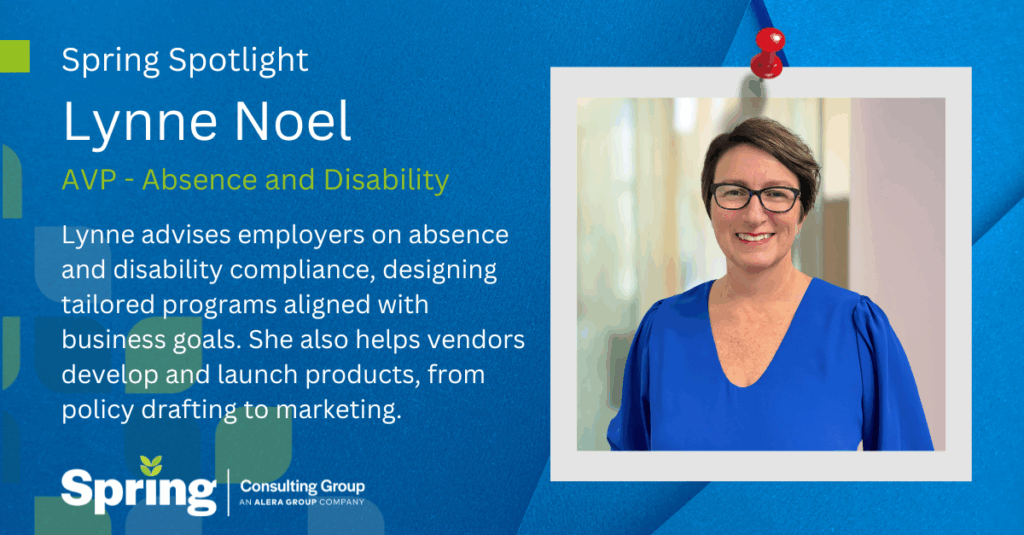
Title:
AVP – Absence and Disability
Joined Spring:
I joined Spring in January 2024
Hometown:
Chesterfield, MA (near Northampton)
At Work Responsibilities:
I help employers navigate complex absence and disability laws and develop customized absence and disability programs that are both compliant and strategically aligned with their goals. Simultaneously, I support absence and disability vendors in developing and launching new products, from drafting policy forms to creating marketing collateral.
Outside of Work Hobbies/Interests:
Cycling, pickleball, gardening
Fun Fact:
In high school, my summer softball team made it to nationals 2 years in a row. I was an academic all-American squash player in college.
Do You Have Any Children?
Two amazing adult humans, ages 28 and 25 – and 3 equally awesome grandchildren with a 4th arriving at the beginning of 2026!
Favorite Band/Musician:
I have loved Melissa Etheridge since I played frisbee with her and her band on the lawn of my dorm at Smith College in 1990 and she signed my cassette of her first album! I have seen her in concert at least 20 times.
Favorite Book:
A Gentleman in Moscow
Spring Consulting Group is contracted with the State of Maine to conduct actuarial studies of the Maine Paid Family & Medical Leave (PFML) trust fund. You can read the full press release here.