Our Actuarial Team teamed up with Alera Group experts on this COVID-19 and Mental Health Trends whitepaper which looks at the post-pandemic mental health landscape, including impacts on employees, children, plan costs, care gaps, and substance abuse.
In collaboration with Alera Group, our Actuarial Team helped create a whitepaper which provides guidance around eligibility, procedures, and plan costs for coverage of over-the counter COVID-19 tests within health plans, as mandated by President Biden. You can find the full whitepaper here.
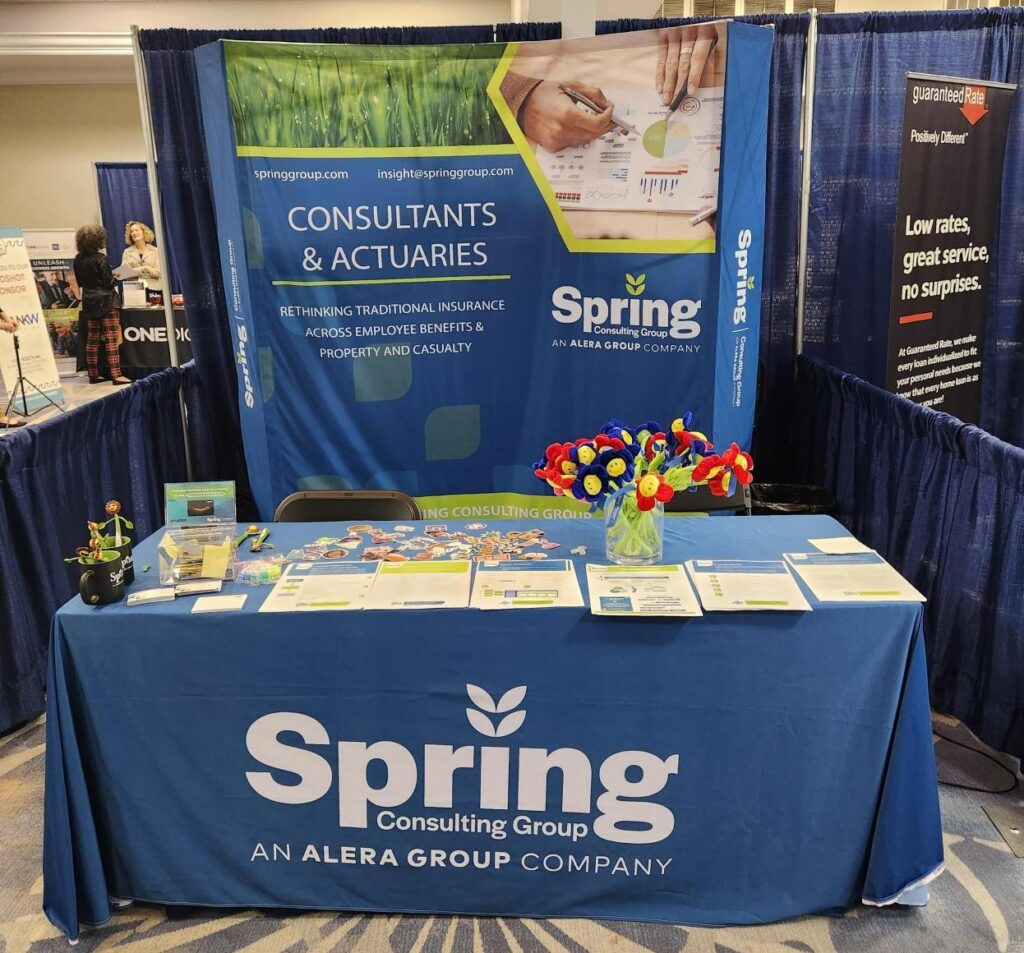
Within the last couple of years, we have seen drastic shifts in the wants and needs of employees nationwide. The COVID era sparked and enhanced new practices and benefits that were not popular in the past, such as mental health resources for remote workers, utilizing tech in HR and addressing burnout. Now that COVID effects are less severe and we have returned to more normalcy in many ways, employers must grapple with remote, on-site, and hybrid work models while keeping their workforce happy and engaged. These trends were evident in this year’s Annual Conference hosted by the Northeast Human Resources Association (NEHRA). NEHRA is one of the leading organizations that brings together HR industry professionals to network and share best practices. This year’s conference took place in Newport, RI and Spring had the pleasure of attending and exhibiting.
Here are some of the areas most focused on this year:
1) Adapting to a Hybrid Workforce
Although hybrid and remote work may seem like the norm for many of us, employers are still struggling to keep their workforce connected and satisfied while retaining efficiency. During the peak of the pandemic, many organizations moved to fully remote and are now looking at whether they will require employees to be in the office full-time, part-time, or not at all. Below are some of the sessions that best tackled this issue.
– A session titled “Driving Career Development in a Hybrid World” explored how the adoption of technologies during the pandemic has led to an increase in professional career development tools, but on the other hand, has prevented many employees from showcasing their true talents.
– In the Closing Keynote Panel, three local HR executives from Mersana, Progress and Ocean State Job Lot explained how their organizations have maintained award-winning workplace cultures with a dispersed workforce.
2) Acquiring/Retaining (Next Gen) Talent
As baby boomers are exiting the workforce and Gen Zers are entering, it has caused a great shift in office culture and employee benefits. Gen Z grew up in a technological world with an emphasis on mental health, and often expect their organization to reflect the same standards. Here are a couple of noteworthy sessions related to attracting and retaining next gen talent:
– During “Bridging the Generational Gap through Wellness Initiatives,” a representative from the Town of Barrington, Rhode Island, described how their wellness initiatives have helped increase retention and alleviate burnout among cross-generational employees.
– Experts from Apprentice Learning and FHL Boston explained how organizations can introduce a workplace culture that attracts young people of color in their “Engage Your Employees to Build an Equitable Workforce for the Future” presentation.
3) Reinforcing Employee Wellness
At previous NEHRA conferences and other industry-related events we have seen a giant emphasis on mental health. This year the topic of mental health resources has taken a back seat and many industry leaders chose to focus on the related subject of employee wellness practices instead, spotlighting the importance of…
a) Creating a Culture
Creating a workplace culture with employees of different ages, experiences, locations, and expectations can be a daunting task as an employer. Below are a few of the sessions that provided insights on how to best establish an inclusive company culture.
– National Behavior Health Leader, Dr. Joel Axler discussed signs and symptoms of someone struggling with mental health challenges employers should look out for during his session “Empathy in the Workplace.”
– Roman Music Therapy Services, Meredith Pizzi spotlighted unique ways HR teams can generate workplace cultures that reflect the company’s vision while also inspiring employees.
b) Just Add Joy!
Creating a workplace culture with employees of different ages, experiences, locations, and expectations can be a daunting task as an employer. Below are a few of the sessions that provided insights on how to best establish an inclusive company culture.
– In the Keynote Presentation titled “Create a Workplace People Love – Just add Joy!” the Co-Founder of Menlo Innovations, Rich Sheridan, suggested organizations move away from outdated corporate traditions and adopt new approaches based on what employees want.
– In the breakout session, “What is Stealing Your Joy? Simple Steps to Bring it Back,” attendees had the chance to openly discuss what obstacles are weighing them down at work and possible solutions.
All in all, the conference was a great success and provided an excellent atmosphere for networking and discussing industry trends. Every year I feel like I’m seeing more young talent, which gives me a good feeling about the future of our industry. I am already excited to see what next year’s conference brings!
Spring has been selected to help the Maryland Department of Labor (MDL) more effectively implement and administer the Family and Medical Leave Insurance (FAMLI) Program. Check out the press release here.
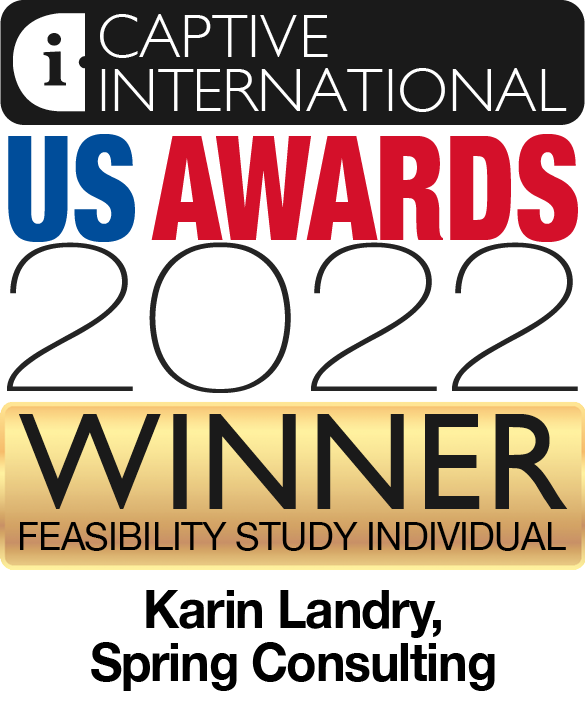
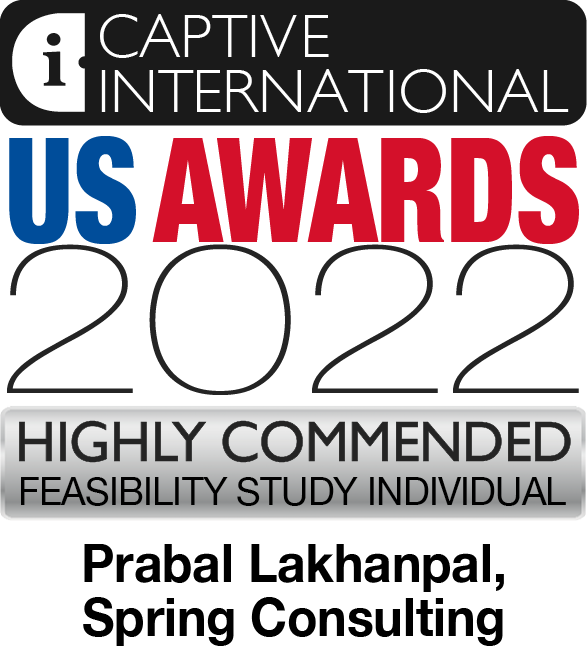
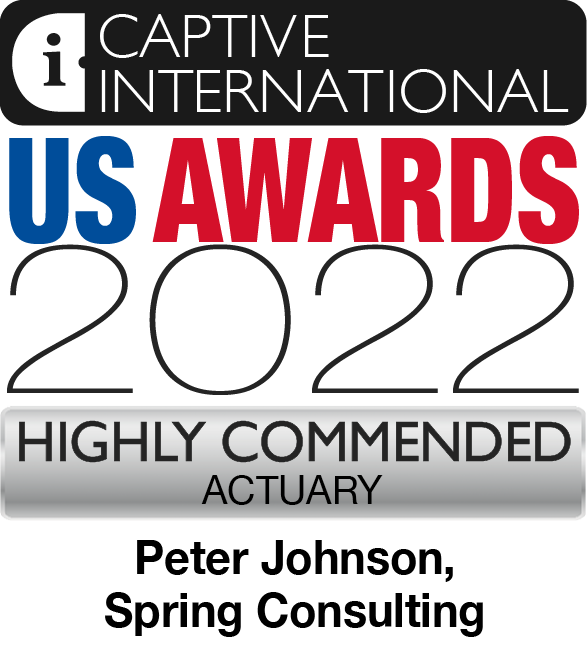
Captive International has released the winners for the 2022 US Awards. Spring is proud to announce that our company and our Managing Partner, Karin Landry were selected as winners for Best Feasibility Study Firm and Best Feasibility Study Individual (respectively). We were also highly commended for Best Actuarial Firm, Best Individual Feasibility Study (Prabal Lakhanpal) and Best Actuary (Peter Johnson).
Our Senior Vice President, Teri Weber published an article explaining how employers can better gauge the efficiency of their leave management programs and highlight areas for process improvement using the secret shopper model. Check out the full article published by the Disability Management Employer Coalition (DMEC) here.
The World Health Organization defines burnout as: a syndrome conceptualized as resulting from chronic workplace stress that has not been successfully managed and recognizes three identifying characteristics of the phenomenon:
- Feelings of energy depletion or exhaustion
- Increased mental distance from one’s job, or feelings of negativism or cynicism related to one’s job
- Reduced professional efficacy
Burnout has gained its status as a bona fide buzzword for good reason. A recent survey by Indeed found that 52% of workers were feeling burned out, up 9% from pre-COVID times; while a 2021 American Psychological Association study showed that 3 out of 5 employees reported negative impacts of work-related stress, such as lack of interest, motivation, and energy. The impacts of burnout go beyond an unhappy workforce. In fact, employees struggling with burnout are:
- 63% more likely to take a sick day1
- 23% more likely to visit the ER1
- 2.6 times as likely to look for a different job2
- Less likely to participate in meetings or projects, which can have a negative influence on company culture
All of these factors contribute to lost productivity, a drain on both financial and non-financial resources (e.g., other team members needing to take on more from a burned-out colleague, or resources spent on replacing employees that have resigned due to burnout), and overall a workplace environment that is far from ideal. Although every industry is struggling with burnout, healthcare and higher education are industries with unique challenges. Both require a higher onsite presence than other industries and have experienced a lot of change related to the pandemic.
At this point, you have likely heard the term burnout and understand its prevalence, but perhaps don’t have a clear path forward to prevent or mitigate the issue.
What to Do About Burnout
If you notice a team member seems less engaged or enthusiastic, tangibly overwhelmed, is declining in performance, or just less present – these are all flags for burnout. Often burnout can be nipped in the bud before getting to a more extreme state if you know the signs and have tactics in place toward resolution. Often supervisors will notice these signs early in the process, which means training related to burnout and compassion are imperative.
From a quantitative perspective, we’ve seen organizations successfully respond to employee burnout by implementing or boosting the following:
- Facilitation of work-life balance, by offering resources to help employees find that balance
- Regular monitoring of responsibilities and schedules
- Encouragement, or even a mandate, to use paid time off
- Flexibility regarding hours, place of work, etc.
- Management training including how to deal with burnout, and establishment of best practices
- Creation of clearly defined career paths and professional development opportunities
- Open, frequent, and honest communication
- Wellness programs and tools
- Protocols for recognizing accomplishments where the work matches the reward
On the more tangible side, wellness tools like Headspace, Calm, and Noisli have been developed to tackle stress, focus, and productivity. There is also a range of virtual counseling and mental health platforms available for employers to provide additional support to employees. At Spring Consulting Group, we have access to a platform called Spring Health, which offers counseling services, Employee Assistance Programs (EAPs) and more.
Burnout solutions must align with your organizational goals and demographics. I mentioned that industries like higher education and healthcare have different forces at play, which need to be accounted for in a burnout strategy. It can be a challenge to know where to begin but expanding on current offerings can be an easy first step as well as surveying employees to understand what services would be considered value-add to most participants. The key is to know burnout is negatively impacting your population and if unaddressed it will compound an already burdened attraction and retention strategy. The time is now to make it a priority and find solutions.
1https://thrivemyway.com/burnout-stats/
2https://www.gallup.com/workplace/237059/employee-burnout-part-main-causes.aspx
Executive Summary
Musculoskeletal (MSK) conditions are a driving force behind healthcare spending, representing an estimated 17% of all spending in the US healthcare market. In addition, MSK conditions are the leading contributor to disability worldwide.1 Some examples of MSK conditions include osteoarthritis, rheumatoid arthritis, osteoporosis, sarcopenia, back and neck pain, and fibromyalgia.2 MSK pain may be acute or chronic, localized or affecting the entire body.3 Additionally, conditions may or may not be related to work, creating an added layer of difficulty in understanding the condition and addressing individual patient needs.
Many models currently exist that attempt to control costs related to MSK conditions. While the vendors providing these programs are confident in their success, it can be difficult for employers to select a program that addresses the needs of all employees with relevant conditions. Therefore, a thorough and ongoing review of organizational health data is necessary. For example, what a hospital needs in an MSK program may vary greatly for an employer operating solely out of an office setting. When reviewing workers’ compensation claims, how many are MSK related? If there is a concern, employers may want to start by implementing ergonomic reviews where the employee works to ensure there is nothing at work that is negatively impacting the employee. Other attempts to address MSK costs focus on care and treatment after the injury or disorder exists such as overall wellness programs, one-on-one coaching, and digital physical therapy offered as an employee benefit.
What is the impact on healthcare spend?
– Musculoskeletal (MSK) conditions are the top cost driver of healthcare spending, followed by heart disease, cancer, and diabetes.
– The average health cost per member with MSK condition increased by 40% between 2010 and 2019.
– COVID-19 aggravated this trend as more workers shifted to remote work; 70% of employees with MSK conditions experienced new or increased pain.4
-The Department of Labor’s Bureau of Labor Statistics estimates that about 30% of workers’ compensation injuries fall under MSD.5
As costs have increased, traditional approaches to treating MSK conditions have not shown a corresponding improvement in patient outcomes. This may include surgery, advanced imaging, injections, and pain management.6 It may be time to consider alternative treatment options to appropriately address these rising costs and employee pain levels.
What alternative models exist?
As employers, employees and providers begin to understand that traditional treatment options may not be the best approach for specific cases, alternative approaches have grown in popularity. Workers’ compensation claimants receiving opioids dropped from 55% to 24% between 2012 and 2018, while there was a 131% increase in the use of massage to address chronic pain, a 26% increase in the use of orthotics, and a 15% increase in the use of physical therapy, according to the National Council on Compensation Insurance (NCCI).7
Employers who have identified a significant impact of MSK conditions on their claim costs should seek programs that can be added to their benefit offering. There is a large market for these alternative treatment options, some components of which are listed below:
- Digital physical therapy clinics using wearable technology
- Pain relief wearable technology
- Custom physical therapy programs and coaching, in person or remote
- Case review by leading medical providers
- Therapy addressing psychology and education of conditions and pain
- Remote work ergonomics
- Focus on chronic pain management
- Corporate wellbeing programs
Specialty MSK vendors track data that implies overall success including a 50% to 70% reduction in pain, 40% to 75% reduction in anxiety and depression, increased adherence and participation in programs, surgery avoidance, and return on investment for employers.
What should I do as an employer interested in an MSK program?
Employers must begin by understanding the cost associated with musculoskeletal conditions within their population, as well as the range of conditions employees may be experiencing. If costs (medical and pharmacy) are significant or increasing, employers should consider alternative programs that would benefit employees and the plan. Identifying a pattern may demonstrate the need for a specific approach like preventive programs or ergonomic assessments.
From there, market research will be necessary to understand pricing and select a vendor with the best program for your population. Spring’s consultants are here to help with market research, claims and data analysis, and/or a Request for Proposal (RFP) process so that you find a solution that best meets your organizational needs.
1https://www.businessinsurance.com/article/00010101/NEWS08/912336312/Musculoskeletal-disorders-in-comp-highlight-prescribing-changes, https://www.who.int/news-room/fact-sheets/detail/musculoskeletal-conditions
2https://www.who.int/news-room/fact-sheets/detail/musculoskeletal-conditions
3https://my.clevelandclinic.org/health/diseases/14526-musculoskeletal-pain
4https://healthactioncouncil.org/getmedia/a738c3c5-7c23-4739-bb8d-069dd5f7406b/Hinge-Health-State-of-MSK-Report-2021.pdf
5https://www.businessinsurance.com/article/00010101/NEWS08/912336312/Musculoskeletal-disorders-in-comp-highlight-prescribing-changes
6State of MSK Report 2021, Hinge Health
7https://www.businessinsurance.com/article/00010101/NEWS08/912336312/Musculoskeletal-disorders-in-comp-highlight-prescribing-changes
Coming out of our COVID haze, it can be difficult to remember a time when employers could be truly strategic and proactive without priorities evaporating due to lockdowns, staffing shortages, travel bans or taking a U-turn due to pressures in other areas of the business. The time is now to pivot back to your strategic plans related to employee benefits. We recommend the road to an optimal benefits program be lined with solutions to specific pain points and cultural considerations at your organization. However, I advise at least considering the following within your strategic roadmap to see if they are a fit and can close gaps within your current program.
1) Employee Surveys
Priorities within your workforce have likely changed considerably in the past two to three years. If you haven’t asked employees about their priorities related to employee benefits, it is time! Some of your more traditional benefits or office-affiliated perks that may have been linked to attraction and retention in the past are no longer a value add to employees. It is not enough to talk about perks and flexibility; needs must be better understood to ensure you are providing something that actually attracts and retains talent, instead of the
2) Lifestyle Accounts
Financial accounts within employee benefits are not new (e.g., a Flexible Spending Account), but recently employers have started using these account-based perks in different ways to fill a gap that exists in their offering while providing ultimate flexibility. These accounts are taxable but can be used within the parameters set by the employer. Organizations may use them to support just about anything, but common categories today include:
– Medical procedures that may not be covered within the medical plan (i.e., infertility services, elective procedures, etc.)
– Travel expenses for medical services
– Family-focused benefits (i.e., doula, etc.)
– Legacy wellness support (i.e., fitness equipment, fitness classes)
The beauty of these services is that they can be selected based on employee needs as well as organizational culture and budget.
3) Absence Policies and Processes
Diversity, equity, and inclusion (DEI) are at the top of the list of internal initiatives, and goals are uniquely defined based on how much progress has already been made. It goes without saying that DEI is critical to the success of all companies, but I think a key area of DEI that requires some additional attention is your corporate absence strategy. Over the past few years, organizations have developed additional absence policies around COVID-19 and Monkey Pox, but there has also been a large push toward more family-focused leave of absences surrounding bereavement, parental leave, and the like. It’s important that DEI initiatives within employee benefits focus not only on the services but also on the time off that may be required, and viewing this through the many lenses of your diverse workforce.
4) Oncology Support
As benefits professionals, we have worked diligently to identify point solutions for high-cost and highly disruptive conditions. While point solutions continue to be part of a strong strategy, most employers have or will see an increase in oncology prevalence and spend due, in part, to expensive treatments but primarily driven by disrupted or delayed care and screenings.
Initial concerns with COVID-19 not only decreased primary care visits but snowballed, as providers later had limited appointments available due to overwhelming demand, which has translated into undiagnosed cancers. Now as participants are getting back to their primary care physicians, many cancers have progressed further or upstaged, creating the need for more intense and complex treatment.

In addition to the direct cost of cancer care, employee productivity is significantly less after a cancer diagnosis, even if that diagnosis is within their extended family.
Spring encourages employers to seek a proactive and holistic approach to oncology support, including some or all the following:
– Monitor screening engagement
– Encourage prevention including reminders and other communications; consider incentives
– Educate and support initial and ongoing care decisions
– Concierge support
– Clinical support
Of paramount importance is to educate and engage employees before a diagnosis, so they know where to go for initial support. Those first few weeks after a diagnosis are critical to setting the stage for appropriate treatment and clinical review and/or second opinions. There are some free and buy-up options in the market provided by top-tier cancer care providers/facilities. Those have brand recognition and are designed to provide unbiased support but, in many cases, they also funnel patients to their service centers. Another consideration available is point solutions that are agnostic to cancer care providers/facilities and provide concierge support but do have an add-on charge, typically as a per employee per month (PEPM) or per referral model.
5) Healthcare Disparities
One of the most complex items that should be on your roadmap is to examine what healthcare disparities exist in your population. For starters, ensure multilingual communications are available to close healthcare gaps for those with language barriers. From there, it is important to begin to stratify your population – if your size warrants – and begin to examine if health outcomes are impacted by race, location, earnings, and/or other social determinants of health. This strategic initiative must be performed in collaboration with your insurers and third-party administrators and will take dedicated time to set a methodology and refine your findings over time. The key is to at least get started by looking at the data and talking about how you can improve your understanding of the current state to work toward better data in the future.

Setting the strategic plan for your employee benefit package should be customized to your organization’s priorities and complexities that are identified through claims experience and survey information. Given each organization has its own culture, demographics, and business priorities, it is impossible to set a perfectly standard list of considerations when it comes to your employee benefit strategy. But as you drive toward the best vision for your company – off in the horizon – be sure to stop along the way to check out these five hotspots of benefits planning.
Spring frequently helps employers assess different solutions, plans, and programs and build them into their roadmap. One client, edHEALTH, is currently organizing three solution committees to refine areas of opportunity and prioritize solutions based on demand and change readiness.